Some links that will prove helpful in your studies students. The lecture notes can be found in the homework folder by the way.
Moral theories (skip the bio ethics bit but do read the rest ;D)
Egoism
Sunday, November 02, 2008

Wednesday, October 29, 2008
History revision


On August 6, 1945, the United States used a massive, atomic weapon against Hiroshima, Japan. This atomic bomb, the equivalent of 20,000 tons of TNT, flattened the city, killing tens of thousands of civilians. While Japan was still trying to comprehend this devastation three days later, the United States struck again, this time, on Nagasaki...
Revision
Revision2
Revision3
Founder and leader of the Nazi Party, Reich Chancellor and guiding spirit of the Third Reich from 1933 to 1945, Head of State and Supreme Commander of the Armed Forces, Adolf Hitler was born in Braunau am Inn, Austria, on 20 April 1889. The son of a fifty-two-year-old Austrian customs official, Alois Schickelgruber Hitler, and his third wife, a young peasant girl, Klara Poelzl, both from the backwoods of lower Austria, the young Hitler was a resentful, discontented child...
Hitler
Hitler1
Monday, October 06, 2008
Finalist
Boys and gals presenting the finalist who will take part in the exhibition on Thursday the 9th of October:
1.Summer
2.Awimbawe
3.STE2
4.SMK Group
5.T3MID
6.Unstoppable
1.Summer
2.Awimbawe
3.STE2
4.SMK Group
5.T3MID
6.Unstoppable
Monday, September 29, 2008
Land of Conflict

Just because we're having Hari Raya break that does not mean that you must neglect your readings ladies. Do please read the links below. Have a nice Hari Raya break to all, maaf zahir dan batin ;D
The parable of the the family with an orphan
Land of Conflict
Sunday, September 28, 2008
Cuban Missile Crisis

The Cuban Missile Crisis was the closest that the United States and The Soviet Union came to an all out nuclear war.Read the account below to find out how the world came close to annihilation.
Armageddon averted
Monday, September 08, 2008
Containment, Truman Doctrine and the Marshall Plan

The Truman Doctrine
Soon after the destruction and surrender of Germany in 1945, the Soviet-American Alliance dissolved into competing national interests, ideologies, and visions of postwar Europe. More here
Individual Assignment No.4: The Truman Doctrine

On Friday, February 21, 1947, Great Britain notified the United States that it could no longer provide financial aid to the governments of Greece and Turkey. American policy makers had been monitoring Greece's deteriorating economic and political conditions. There was a civil war taking place between the Greek monarchy and communist guerillas, and there was a severe economic crisis. The United States was also observing Turkey, where a weak government faced Soviet pressure to share control of the Dardanelles Straits. Both Turkey and Greece had in modern times depended on Britain's diplomatic and economic support, but it now seemed that London planned to pass this responsibility on to the United States.
Like much of the chaos of the early cold war, the problems of Greece and Turkey stemmed from World War II. Turkey's dilemma derived from Stalin's demands for joint control of the Dardanelles. When negotiations for this joint control failed, Stalin stationed troops near the Turkish border. Meanwhile, Greece faced a political vacuum and civil war following the withdrawal in October 1944 of Nazi occupation forces from the war-ravaged land. EAM-ELAS rebels received outside assistance from Communist Yugoslavia and neighboring Albania and Bulgaria, and inflicted havoc on the unstable Greek monarchy. Great Britain, aware that Greece was an important Middle Eastern sphere of influence, supported the country's right-wing government.
Questions
1. What were some of the problems facing Greece and Turkey in 1947?
2. What did many of the problems facing Greece and Turkey in 1947 stem from?
3. How would you describe what is meant by a "political vacuum"?
4. Why was it important to the United States that the spread of communism be halted before it reached Greece?
5.How would you describe what is meant by a "sphere of influence"?
Tuesday, September 02, 2008
Individual Assignment No.3, Semester 2. The Second World War

Stephen Roth, Art has become very spontaneous and sincere under the supervision of National Socialism (1940)
The Nazis regulated all aspects of German life including art. The title of this cartoon is taken from a declaration made by Joseph Goebbels, the Minister for Propaganda.In this work the cartoonist Stephen Roth is commenting ob both the control of German art and the way it was achieved. Those artists who produced works not approved of by the Nazis were visited by "aesthetic officials" and forced to conform to the Nazi concept of art. In this cartoon the artist is being guided in his work by Heinrich Himmler who is dressed in the black uniform of the SS. Study the cartoon and answer the questions below.
Questions
1. What method of persuasion is Himmler prepared to use to ensure that the artist produces the right kind of art?
2. Who does the cartoonist suggest is really doing the painting in this cartoon? How does he suggest it?
3. In the cartoonist's opinion, what has happened to German art under the Nazis?
4. In your opinion, what will happen to a society that severely controls artistic freedom?
5. State THREE (3) countries that still do not allow the freedom of expression.
Individual Assignment No.2, Semester 2, 2008. The First World War

Poison gas was a frightening weapon, one used by both sides during the First World War. The first letter gives a first hand account of what it wa like to undergo a gas attack. The letter was written by an Australian soldier, Corporal Thomas and was dated 20 March 1918. For many men the strain of war was too much and they became deranged in the trenches. The second extract is part of a latter written by Captain R.Goldrick, an Australian officer, April 13, 1917. It gives an account of a soldier going mad during combat.
Read the letters and answer the questions which follow.
Letter No.1
"We were well out in the open...suddenly crash and several big musher (high explosive) shells shrieked about our ears, then on they came thick and heavy and what was more disastrous gas two sniffs and I was satisfied...I whipped out my helmet and jambed the rubber into my mouth and put the nose clip on and then speedily warned my platoon to put on their equipment...We have a lot of new men and they completely lost their heads, an easy thing to do when new but it is fatal in these big gassing stunts, a number of them put the hoods on and could not see through the glasses, then they tore them off, so I had to risk everything and yell out orders and help the poor excited humanity about me, of course I got a gut full but I didn't give a damn, my usual faith in things, however I got them moving...at a steady walk, it was awful the uncanny feeling of death eating at one's entrails and the gasping of the men trudging behind you, the thunder of the shells, and the fires from the dumps showing ghostly through the gas smoke, a bluish vapour hanging like a pall...[For more than an hour,we]just kept on through a veritable hell let loose; it was my job to get my men treated for gas, many of them starting to trumble about as though they were drunk and half a mile away, in a tunnel, was an A.M.Red Cross station; at last...we reached the hospital and each man very exhausted and fearfully windy was given a drink of amonia which is supposed to have a benificial effect;however two men died from gassing, weak hearts you see, poor devils it is terrible and the horror of it; yet we all had to go up again the next night and carry on as usual.
Letter No.2
One of our men...went suddenly demented. The s.s. [shell shock] had an electrifying effect upon him...[He] dropped his rifle and...rushed out over the front line trench in No man's land, the Germans blazing away at him:then he turned and ran down between the lines of the two armies: no one seemed able to bring him down.The he turned again, raced into our system, down overland through the support trenches...where men from the Battalion pursued him overpowered him, and forcibly rolled him in blankets and tied him up with rope...He was unwounded but evacuated raving mad.
Questions
Look at the first letter:
1.What did Corporal Thomas do when he reralised there was gas?
2.What does Corporal Thomas say was "eating at one's entrails"?
3.How were the affected men treated at the hospital?
Look at the second letter:
4.Where did the demented man run to?
5.How was he restrained?
Monday, September 01, 2008
Sunday, August 17, 2008
Group Project-Foundation Studies
Moral Studies MPW 2153
Foundation Studies Programme
“Saving the Environment”
Group Project Assignment (25%) & Individual Assignment (20%)
Total Marks: 45%
INTRODUCTION
________________________________________________________________________________
This semester, you are required to engage in a project, which aims at raising awareness in the community. The basic goal of this activity is to create an opportunity for you to research on a particular issue, and exhibits the poster in a way that will benefit others. This will help promote both intellectual and civic engagement by linking the work you do in the classroom to real-community needs.
PROJECT COMPONENT
________________________________________________________________________________
The component of this project will entail action plan, in-class presentation, exhibition, and report writing. This will help give you a hands-on experience and a really good understanding of a particular issue.
Action plan
_______________________________________________________________________________
You are required to select ONE environmental issue pertaining to Malaysian society. Your group will have to find as much information regarding the issue.
You are also expected to confirm with your lecturer on the topic by Week 4 (Aug 18th , before 5 pm) for approval.
Group presentation (10%)
_______________________________________________________________________________
Group presentation will be conducted in Week 8 and 9. All groups will present in class the issue and the strategy. Duration of presentation is 15-20 minutes.
Grading will be based on:
The issue chosen.
The planning.
Strategy to raise awareness.
Effort
Exhibition (10%)
_________________________________________________________________
Exhibition on campus (Week 10-6th -10th October 2008)
Group Report: Learning Journal (15%)
_________________________________________________________________
1. A TWO-page summary of the issue (i.e., the background, the importance)
2. What are the main factors contributing to the issue in question?
3. What are your group’s suggestions to resolve this problem (Give 3 suggestions)
4. What are your experience when undertaking the project (i.e., the difficulties you encounter and strengths that you acquire as a team).
Individual Report (10%)
__________________________________________________________________
Evaluation
This section is to be completed individually. Each member has to summarize what he/she has learnt from this project.
1. Your role in the team.
2. What have you learnt?
3. Personally discuss the contributions you have made in this assignment.
4. How do you want to improve next time?
Instructions for Written Reports
Topic: Please choose your own title.
Submission date: Week 11
Reference: All sources must be properly acknowledged, i.e., using Harvard referencing style.
Length: 10-12 pages.
Font: Tahoma, Ariel, Bookman and Times New Roman. The acceptable font size is 12. This will not include any charts, graphs, or other visual depictions.
Spacing: 1.5 spaced word on white A4 paper.
Additional Reminder: Your name, ID number, program, group number, word count, tutor’s name and the title of your assignment should be on the front cover of the assignment.
History-The Evolution of the Technology of Killing

When war was declared in August of 1914, few people had realised how far military technology had advanced. To most young men, their view of warfare are coloured by their perceptions of Napoleonic paintings that they saw hanging from the walls of museums.The idealised and romanticised view of war influenced these young men.France and Germany had gone to war (Franco-Prussian War 1870-1871)but even this event was a distant memory to most. View the short video clips below and observe how technology had transformed the modern battlefield:
The Musket (19th Century)
The Maxim Machine Gun (20th Century)
Thursday, August 14, 2008
Degree Group Assignment
Moral Studies MPW 2153
Group Project and Individual Assignment
Total Marks: 45%
INTRODUCTION
________________________________________________________________________________
This semester, you are required to engage in a community service at the local charity organization. The basic goal of this activity is to create an opportunity for you to start service learning that will benefits both you and the community. Furthermore, it helps promote both intellectual and civic engagement by linking the work you do in the classroom to real-community needs.
PROJECT COMPONENT
________________________________________________________________________________
The research component of this project will entail action plan, community service work, in-class presentation and report writing. This will help give you a hands-on experience and a really good understanding of a particular charity organization or service work.
Action plan
_______________________________________________________________________________
Selecting a charity organization for community service. You will decide in your group which charity organization or service work you are interested in.
Plan the charity activities you plan to carry out. The proposed plan must be submitted to the tutor for approval. (Proposal can be made verbally or in writing).
Community service
_______________________________________________________________________________
The community service is scheduled in Week 8 and 9 in which no tutorial class will be conducted.
Group presentation (10%)
_______________________________________________________________________________
Group presentation will be conducted in Week 10. All groups will present in class the activities that they have done. Grading will be based on:
1) contents
2) style(voice quality, eye contact)
3) use of graphics or other visual aids
4) overall preparation
5) overall effectiveness of the presentation.
**Groups are expected to do a power point presentation.
Report writing.
_______________________________________________________________________________
(A) Individual Journal (20%)
Task: What action did you perform? (2 pt)
Narration. Describe your experience – what you did, what you saw, what you heard, who you talked to, and/or anything else about the volunteering experience that you thought was interesting. (5 pts)
Evaluation. Explain what you think you learned from the experience. (5 pts)
Identify three (3) types of values you have acquired from the charity work. Justify. (3 pts)
(B) Group report (15%)
The group report needs to incorporate all aspects of the community service project. The report will include the following:
Introduction (3 pts) –background of the organization.
1. What type of service(s) do the charity organization provide for the community?
2. Who are the significant people in the organization? What roles they play in the organization?
Objectives (3 pts) – what are the objectives of your volunteer work? What do you hope to achieve through the charity work? What have you actually achieved from the it?
Report (6 pts):
1. What are the specific roles each member is assigned to?
2. Who-what-when-where. The date and time of the volunteer episode, number of hours, charity organization or the task your group volunteered for, what you all did.
Discussion (8 pts) –
1. How did your actions benefit the organization?
2. Evaluate your organization: Describe the role the charity organization plays in the community and evaluate its effectiveness.
3. Discuss the strengths and weaknesses of the organization, and evaluate whether or not they are doing a good job.
4. What other aspects of the organization that you wish to improve? (Suggestions)
Instructions
_______________________________________________________________________________
Topic of assignment: You can choose your own title.
Submission date: 11th week (just after your group’s presentation)
Reference: All sources must be properly acknowledged, i.e., using Harvard referencing style.
Length: 10-15 pages.
Font: Tahoma, Ariel, Bookman and Times New Roman. The acceptable font size is 12. This will not include any charts, graphs, or other visual depictions.
Spacing:1.5 spaced word on white A4 paper.
Additional Reminder: Your name, ID number, program, group number, word count, tutor’s name and the title of your assignment should be on the front cover of the assignment.
Monday, August 04, 2008
Imperialism-Slideshow

A very good slideshow presentation on the topic of Imperialism. Use the information in the slides to supplement the notes that you already have ;D.
Sunday, August 03, 2008

What I'm listening to at the moment...
Yeah, I know, I know what has this got to do with Moral Studies or History-well nothing, just enjoy the song ;D.
Scramble for Africa (for History students only)
 I hope all of you had a good weekend off. Before coming to class please read this link on the Scramble for Africa. At the beginning of the 20th Century most of Africa, the Middle East and Asia was under the control of European powers. Questions for discussion during the tutorials:
1. Why do cultures, ancient and modern, seek to impose their rule upon foreign peoples?
2. How did, and do, imperialistic cultures justify their control of foreign peoples?
Sunday, July 27, 2008
Welcome Semester 2 Students
 To all Moral Studies and 20th Century World History students, welcome to Semester 2!!
Individual Assignment No.1, Semester 2, 2008. Colonialism

Dadabhai Naoroji: The Benefits of British Rule (1871)
The Benefits of British Rule for India
In the Cause of Humanity:
In the Cause of Civilization: Education, both male and female. Though yet only partial, an inestimable blessing as far as it has gone, and leading gradually to the destruction of superstition, and many moral and social evils. Resuscitation of India's own noble literature, modified and refined by the enlightenment of the West.
Politically: Peace and order. Freedom of speech and liberty of the press. Higher political knowledge and aspirations. Improvement of government in the native states. Security of life and property. Freedom from oppression caused by the caprice or greed of despotic rulers, and from devastation by war. Equal justice between man and man (sometimes vitiated by partiality to Europeans). Services of highly educated administrators, who have achieved the above-mentioned results.
Materially: Loans for railways and irrigation. Development of a few valuable products, such as indigo, tea, coffee, silk, etc. Increase of exports. Telegraphs.Generally: A slowly growing desire of late to treat India equitably, and as a country held in trust. Good intentions. No nation on the face of the earth has ever had the opportunity of achieving such a glorious work as this. I hope in the credit side of the account I have done no injustice, and if I have omitted any item which anyone may think of importance, I shall have the greatest pleasure in inserting it. I appreciate, and so do my countrymen, what England has done for India, and I know that it is only in British hands that her regeneration can be accomplished. Now for the debit side.
The Detriments of British Rule
In the Cause of Humanity: Nothing. Everything, therefore, is in your favor under this heading.
In the Cause of Civilization: As I have said already, there has been a failure to do as much as might have been done, but I put nothing to the debit. Much has been done, though.
Politically: Repeated breach of pledges to give the natives a fair and reasonable share in the higher administration of their own country, which has much shaken confidence in the good faith of the British word. Political aspirations and the legitimate claim to have a reasonable voice in the legislation and the imposition and disbursement of taxes, met to a very slight degree, thus treating the natives of India not as British subjects, in whom representation is a birthright. Consequent on the above, an utter disregard of the feelings and views of the natives. The great moral evil of the drain of wisdom and practical administration, leaving none to guide the rising generation.
Financially: All attention is engrossed in devising new modes of taxation, without any adequate effort to increase the means of the people to pay; and the consequent vexation and oppressiveness of the taxes imposed, imperial and local. Inequitable financial relations between England and India, i.e., the political debt of ,100,000,000 clapped on India's shoulders, and all home charges also, though the British Exchequer contributes nearly ,3,000,000 to the expense of the colonies.
Materially: The political drain, up to this time, from India to England, of above ,500,000,000, at the lowest computation, in principal alone, which with interest would be some thousands of millions. The further continuation of this drain at the rate, at present, of above ,12,000,000 per annum, with a tendency to increase. The consequent continuous impoverishment and exhaustion of the country, except so far as it has been very partially relieved and replenished by the railway and irrigation loans, and the windfall of the consequences of the American war, since 1850. Even with this relief, the material condition of India is such that the great mass of the poor have hardly tuppence a day and a few rags, or a scanty subsistence. The famines that were in their power to prevent, if they had done their duty, as a good and intelligent government. The policy adopted during the last fifteen years of building railways, irrigation works, etc., is hopeful, has already resulted in much good to your credit, and if persevered in, gratitude and contentment will follow. An increase of exports without adequate compensation; loss of manufacturing industry and skill. Here I end the debit side.
Summary: To sum up the whole, the British rule has been: morally, a great blessing; politically, peace and order on one hand, blunders on the other; materially, impoverishment, relieved as far as the railway and other loans go. The natives call the British system "Sakar ki Churi," the knife of sugar. That is to say, there is no oppression, it is all smooth and sweet, but it is the knife, notwithstanding. I mention this that you should know these feelings. Our great misfortune is that you do not know our wants. When you will know our real wishes, I have not the least doubt that you would do justice. The genius and spirit of the British people is fair play and justice.
Source: Dadabhai Naoroji, Essays, Speeches, Addresses and Writings, (Bombay: Caxton Printing Works, 1887), pp. 131-136.
Taken from :http://teacher.sduhsd.net/tpsocialsciences/world_history/imperialism/naoroji.htm. Accessed on 28th July, 2008
Questions
1.Define the meaning of these two words: "Imperialism" and "Colonialism"
2.Do you think Dadabhai Naoroji thinks the British in India a good thing, or a bad thing? Use evidence to support your arguments.
3.Is Dadabhai Naoroji in favour of British rule in India, or not? Explain your answer.
4.Using the evidence in the article, assemble a convincing argument that the British were a bad thing for India.
5.In your opinion, which country benefited the most from colonialism? Please elaborate.
3.Is Dadabhai Naoroji in favour of British rule in India, or not? Explain your answer.
4.Using the evidence in the article, assemble a convincing argument that the British were a bad thing for India.
5.In your opinion, which country benefited the most from colonialism? Please elaborate.
Monday, July 14, 2008
Supplementary Revision
1.What is an example of a moral value?
2.Define intellectual virtues.
Reminder-also read through the notes in the homework folder it will be helpful to those taking the supplementary paper.
2.Define intellectual virtues.
Reminder-also read through the notes in the homework folder it will be helpful to those taking the supplementary paper.
Monday, June 23, 2008
History revision notes

Students, this will be handy for you ;D .Don't give up!:
1.How many countries in ASEAN claim parts or all of the Spratly Islands?
Refer to Spratly Islands and the notes on Obstacles to Reconciliation (lect14).
2. After the end of the Second World War, the world was split into 2 areas of influence-Communism and Capitalism (democracy). What are the differences between these 2 ideologies? Did the 2 sides actually come into direct conflict with each other or did they fight using third parties (proxies)?
3. The Marshall Plan was................................?
Happy studying!
Sunday, June 22, 2008
Attention
Will these students please (I'm very lenient this semester) submit their individual assignments by 25th of June or you will risk the possibility of failing MPW2153:
7D7A4571
7D8A5507
7D8A5827
7D7A4571
7D8A5507
7D8A5827
Wednesday, June 18, 2008
REVISION QUESTIONS #1

1. Suppose you are walking to your class, and the most direct route is across the grass along a path that is well worn by frequent use. A sign posted nearby reads, “Please do not walk on the grass,” but most people disregard it. Should you disregard the sign too?
a. Give your personal opinion and justify why you do what you do.
b. What will be the right thing to do from the perspective of act and rule utilitarianism?
2. What are the main key points in social morality theory? What are its disadvantages?
3. What is teleology?
Monday, May 26, 2008
Study Skills Workshops
To all of my advisees-there will be 2 workshops on the 6th and the 10th of June 2008 on Study Skills organised by the Learning Centre. Those interested should register at the Learning Centre, with Catherine Sim, the nice lady at the front desk :D Oh, you can pick and choose which workshop to go to btw.
Monday, May 19, 2008
Tuesday, May 13, 2008
Moral Topics-Applied ethics and conflict resolution
I have posted the slides on the topic of applied ethics in the homework folder ;D. For a bit more information on the topics that we will look into, please do go to these sites:
Capital punishment
Abortion
Pornography
War
Capital punishment
Abortion
Pornography
War
Sunday, May 11, 2008
Tutorial Activity

Cuban Missile Crisis Simulation
President Kennedy's first reaction to the information about the missiles in Cuba was to call a meeting to discuss what should be done. Fourteen men attended the meeting and included military leaders, experts on Latin America, representatives of the CIA, cabinet ministers and personal friends whose advice Kennedy valued. This group became known as the Executive Committee of the National Security Council. Over the next few days they were to meet several times. During their discussions they considered several different strategies for dealing with the crisis. They included the following:
(1) Do nothing. The United States should ignore the missiles in Cuba. The United States had military bases in 127 different countries including Cuba. The United States also had nuclear missiles in several countries close to the Soviet Union. It was therefore only right that the Soviet Union should be allowed to place missiles in Cuba.
(2) Negotiate. The United States should offer the Soviet Union a deal. In return for the Soviet Union dismantling her missiles in Cuba, the United States would withdraw her nuclear missiles from Turkey and Italy.
(3) Invasion. Send United States troops to Cuba to overthrow Castro's government. The missiles could then be put out of action and the Soviet Union could no longer use Cuba as a military base.
(4) Blockade of Cuba. Use the United States Navy to stop military equipment reaching Cuba from the Soviet Union.
(5) Bomb Missile Bases. Carry out conventional air-strikes against missiles and other military targets in Cuba.
(6) Nuclear Weapons. Use nuclear weapons against Cuba and/or the Soviet Union
Create a table with three columns. Write "Strategy" in column one, "reaction of the Soviet Union/Cuba" in column two and "Other Possible Consequences" in column three.Fill in the rest of the chart. In 'Other possible consequences' you will need to consider issues such as the number of people who may be killed, how successful your action is likely to be, future relationships with other countries and how the decision will influence the elections that are about to take place in the United States.
Study your chart and then decide what you would have done if you had been President Kennedy. You may pick one strategy or a combination of strategies.
Study your chart and then decide what you would have done if you had been President Kennedy. You may pick one strategy or a combination of strategies.
Cuban Missile Crisis
Sunday, May 04, 2008
Welcome back!
Foundation students welcome back from your break, hope you guys are ready for classes ;D. Degree students, your group presentations will be done NEXT WEEK.
Tuesday, April 29, 2008
Article on religious ethics

A very good article on the importance of righteous living can be found at this site. It gives a brief but informative overview of the importance of moral conduct promoted by the major religions of our world today.
Friday, April 25, 2008
What motivates a person to do this?
Taken from a series of Youtube clips available on the Net. For those interested to view the full documentary, type "Cult of the Suicide Bomber" in the Youtube search bar.
Sunday, April 20, 2008
Degree's charity work

 Congrats to all of you who participated in the charity work last Saturday! Am sure the old folks at the Miri Home for the Aged appreciated your time and effort with them.

Congrats also to the guys who raised donations and sold handicrafts on behalf of the Miri Blind Centre. All of you have done a very good job. Er, sorry didn't take photos of the booth that you guys had set up on that day, so er, this photo of the basket that I bought should do :D
Sunday, April 13, 2008
Assignment 4

"We had no desire to start a war"
In his autobiography, Khruschev Remembers, the former Soviet leader Nikita Khruschev provided an extraordinary insight into his motives for moving nuclear missiles to Cuba in 1962. The document which follows is taken from Khruschev's book. Fidel Castro, to whom Khruschev refers, was the communist leader of Cuba. read the document and answer the questions which follow.
I will explain what the Caribbean crisis of October 1962 was all about...After Castro's crushing victory over the counter-revolutionaries [sc.the By of Pigs fiasco, April 1961)we intensified our military aid to Cuba...we were quite sure that the Americans would never reconcile themselves to the existence of Castro's Cuba. They feared,as much as we hoped, that a Socialist Cuba might become a magnet that would attract other Latin American countries to Socialism...The fate of Cuba and the maintenance of Soviet prestige in that part of the world preoccupied me...We had to establish a tangible and effectibe deterrent to American interference in the Caribbean...The logical answer was missiles...I had the idea of installing missiles with nuclear warheads in Cuba without letting the United States find out they were there until it was too late to do anything about them...We had no desire to start a war...
...We sent the Americans a note saying that we agreed to remove our missiles and bombers on the condition that the President give us his assurance that there would be no invasion of Cuba by the forces of the United States or anybody else. Finally Kennedy gave in and agreed to make a statement giving us such an assurance...It has been, to say the least, an interesting and challenging situation. The two mosy powerful nations of the world had been squared off against each other,each with its finger on the button...It was a great victory for us though...a triumph of Soviet foreign policy...a spectacular success without having to fire a single shot!
Questions
1.In Khruschev's opinion what did the Americans fear about Castro's Cuba?
2.What did Khruschev claim preoccupied him in 1961 and 1962?
3.Why did Khruschev want the missiles installed on Cuba without letting the United States know what was happening?
4.What was in the note the Soviets sent to the Americans?
5.In Khrischev's opinion which nation emerged from the crisis triumphant?
Assignment 3

The Malayan Emergency
The Malayan Emergency, which was an attempt by the communists in Malaya to take power by guerrilla warfare, lasted from 1948 to 1960. During this period the Malayan Communist PArty was defeated by British and Commonwealth forces. An overview of the Emergency was provided by the Malaya Official Year Book of 1962.The following extract is taken from the Official Year Book Vol.II, and deals with the beginning of the terrorist campaign in 1948. MCP stands for the Malayan Communist Party. Read the document and answer the questions which follow.
[In early 1948]the MCP made what was probably its greatest mistake-it decided to resort to violence of every description. Nothing was ruled out;murder, intimidation, arson and terrorism generally were now the rule of the day and the means by which "anti-imperialist" activities would be conducted...
The first six months of 1948 saw the revised policy of the MCP being put into effect. Murder and arson was rife, particularly on rubber estates and tin mines.The European executives of these industries were perhaps the main targets, but by no means the only ones. Many Asians paid the penalty for failure to support the party "cause"...
Lenin once observed that the purpose of terrorism was to terrorise, and his disciples in Malaya undoubtedly proved his point. From this time on-particularly in outlying villages, estates and mines-the principle of "sealed lips" was observed for pure self observation.Murders in crowded streets and market places were commonplace, but few members of the public ever volunteered any information. The hands of the police were tired, and the forces of law and order found themselves in stalemate...
On June 16, 1948, "the High Commissioner...declared that a state of emergency existed in the Sungei Siput area of Perak and in West Central Johore; but conditions of banditry continued to spread and the Officer Administering the Government...extended the state of emergency to the whole peninsula on July 12.
Questions
1.By which means did the MCP decide to conduct its "anti-imperialistic" activities?
2.When was the revised polciy of the MCP put into effect?
3.Who were the main targets of murder and arson?
4.Where was the principle of "sealed lips" observed for pure self preservation?
5.Why was the Emergency extended to the whole of Malayan peninsula on 12 July 1948?
Sem.1, Group Project

20th Century World History FP-030
Pre-University Studies
Group Assignment
Total Marks: 25%
INTRODUCTION
________________________________________________________________________________
"History is a guide to navigation in perilous times. History is who we are and why we are the way we are."
- DAVID C. MCCULLOUGH
The 20th Century is a very turbulent and fascinating period in human history.Each decade of the 20th century had a distinct set of issues, events, and even style. This semester, students will have the opportunity to learn more about the 20th century by examining it decade by decade.
Objectives of this project are:
§ To encourage the practice of self-directed learning and collaborative learning among students;
§ To encourage students to do research on certain topics and to help them develop skills and self-confidence in research work, either alone or in a team; and
§ To help students acquire a comprehensive and broad-ranging prerequisite background knowledge of major world events.
PROJECT COMPONENT
________________________________________________________________________________
The research component of this project will entail an action plan, in-class presentation, and report writing. This will help give you a hands-on experience and a really good understanding of a particular issue.
Action plan
_______________________________________________________________________________
You are required to select ONE issue from the decade of your choice. For this semester, you will focus on the decades beginning from the 1940s until the 1990s. Your group will have to find as much information regarding the issue.
Music
Fashion
Significant Events
Personalities
You are also expected to confirm with your lecturer on the topic by Week 6 for approval.
Group presentation (10%)
_______________________________________________________________________________
Group presentation will be conducted in Week 9 and 10. All groups will conduct their presentations in their respective tutorial classes.Duration of presentation is 15-20 minutes.
Grading will be based on:
ü The issue chosen
ü Ability to entertain questions from others
ü Creativity
ü Contents
Report writing (15%)
_______________________________________________________________________________
(A) Report (15%):
1. A research paper on your chosen topic and how it relates to today's society
2. What are the specific roles each member is assigned to?
3. Your experience when undertaking the project (inclusive of the difficulties you encounter and strengths that you acquire as a group)
Guideline for the report
Topic of the report: You can choose your own title.
Submission date: Week 12
Reference: All sources must be properly acknowledged, i.e., using Harvard referencing style.
Length: 5- 6 pages.
Font: Tahoma, Ariel, Bookman and Times New Roman. The acceptable font size is 12. This will not include any charts, graphs, or other visual depictions.
Spacing: 1.5 spaced word on white A4 paper.
Additional Reminder: Your name, ID number, program, group number, word count, tutor’s name and the title of your assignment should be on the front cover of the assignment.
Monday, April 07, 2008
Assignment 2

"Terrific Bombardment By Enemy Batteries"
One of the most terrifying experiences of the First World War was to be shelled by artillery. The only shelter available to the troops was a trench dugout, but even there death was never far away.The passage which follows is taken from the diary of an Australian soldier, Private David Harford, and is an account of an artillery barrage he experienced in October 1916 whilst serving in the Western Front. Private Hartford died of wounds in March 1917, aged 31.Read the passage and answer the questions which follow
[T]errific bombardment by enemy batteries, as...[it]increases...we retire into our dugouts not that they afford much protection as they are shallow and the roof is thin but there are some protection from flying splinters. We lie flat on the floor of our dugouts, most of which are only built for one man and listen to the awful bombardment, which is rapidly merging into a continous roar. The ground trembles beneath me, and the air is charged with the acrid reek of high explosive fumes in all this overcharged horror there comes, as by a merciful dispensation of nature a certain insensibility to all fears, quite simple thoughts pass through ones mind, so it is the end here:Here in this dark mildewed hole in the earth.I am to go out, I look around me at my damp rat-hole the sides and the roof of which are lined with sand bags...the lower bags are green with mildew and the upper ones up near the sun and air are sprouting grass, halfway up in the corner a cluster of poison mushrooms or toadstools peer down at me, the center one a little taller than the rest, seems to nod at me asit sways and trembles to the concussions...one simply notes these things, fear of death having left one: and one prays that at least IT may prove one well placed shell, a crash of thunder and a lightning flash, to thrust us through the dark gates into eternity.Only let it not be crippling and yet life...one wonders whther that last light explosive was a gas shell, how one's comrades are faring, whther ANY of us will be alive when the bombardment ceases. Suddenly there is a concussion that seems to shake the breath out of my body. A big shell has burst very near. Already a man feels in his inmost self half-way to the other world, hopeless but without fear.
Questions
1. Why did the dugouts not afford much protection during the bombardment?
2. What comes "as by a mesrciful dispensation of nature" during the bombardment?
3. What does the write smell and see around him in his dugout?
4. If he is to die in the bombardment, how does the writer hope it will happen?
5. About what doesthe writer wonder during the bombardment?
Taken from Condon, Christopher,. Chapter Eight:The Nature of the First World War, "The Making of the Modern World", The Macmillan Company of Australia, Melbourne, 1987.
And the world descends into a period of darkness...

The outbreak of war in Europe in September, 1939, was the result of a number of factors. In simple terms the aggressive foreign policy of Hitler's Third Reich and the lack of preventative measures by the major european powers to prevent Hitler's increasing use of force in the mid to late 1930's is to blame for the onset of Europe wide conflict. However this is a rather simplistic view of the reasons. War broke out in 1939 for a variety of reasons which can be traced back to the First World War and the peace treaties that were imposed on the defeated nations in its aftermath. Read more by clicking on the links below:
Causes of the Second World War
Welcome

Welcome to the blog history students! For notes on the First World War, check out these links:
Causes of the First World War
Trench warfare
Treaty of Versailles
Sunday, March 30, 2008
Sketch performance

Moral Studies MPW 2153
Foundation Programme
"Lead by example" Project: Performances
Total Marks: 45%
Title: "Lead By Example"
Duration: 10 minutes
INTRODUCTION
________________________________________________________________________________
This semester, you are required to engage in a performance that reflects the theme “Lead By Example”. The basic goal of this activity is to create an opportunity for you to creatively engage in a stimulating and fun ways of learning. In your team, you will research on the given theme and prepare any form of performance that you think will fit the theme.
The basic goals are to:
1. work in a team and use your creativity to come up with a performance.
2. improve on your communication skills.
3. build your self confidence.
PROJECT COMPONENT & ASSESSMENTS
________________________________________________________________________________
The research component of this project will entail action plan, in-class presentation and report writing.
Action plan
_______________________________________________________________________________
Based on the theme “Lead By Example”, your team will have to brainstorm how to reflect this theme into any form of performance.
The proposed draft must be verbally presented to the tutor for approval before you begin the project.
The Performances (15%)
_______________________________________________________________________________
The competition serves to inculcate the value of life among the youth. Each team is given 10 minutes to show the judges how well they understand the theme “Lead By Example.”
The presentations will be conducted in Week 10 and 11.
Grading will be based on:
1) Originality
2) Props
3) Educational value
4) Efforts
Best Performance (5%) (Scheduled in Week 12)
Report writing
_______________________________________________________________________________
(A) Group report (20%)
The group report needs to incorporate all aspects of the project. The report will include the following:
Discussion (10 pts) –
In your team:
1. Discuss how you view the meaning: Lead By Example. Support with relevant examples by applying what you have learnt in Moral Studies classes.
2. Explain your performance and its relation to the theme.
Report (10 pts):
1. How does your group go about completing this project? Discuss the tasks that your team have undertaken and explain how you carry out the task.
2. As a team, identify the THREE (3) obstacles you face when completing this project?
3. How did you manage to resolve those challenges you identified in No. 2?
Individual Report (10%)
___________________________________________________________________
Evaluation
This section is to be completed individually. Each member will explain his/her contribution to this project.
1. Your role in the team.
2. What did you learn from this project?
3. What are the two strengths and two weaknesses you have learnt from this project?
4. How do you want to improve next time?
Instructions
_______________________________________________________________________________
Topic of assignment: You can choose your own title.
Submission date: Week 13 (after the completion of the project)
Reference: All sources must be properly acknowledged, i.e., using Harvard referencing style.
Length: 8-10 pages (Group)
3-5 pages (Individual)
Font: Tahoma, Ariel, Bookman and Times New Roman. The acceptable font size is 12. This will not include any charts, graphs, or other visual depictions.
Spacing: 1.5 spaced word on white A4 paper.
Additional Reminder: Your name, ID number, program, group number, word count, tutor’s name and the title of your assignment should be on the front cover of the assignment.
Tuesday, March 25, 2008
Student Advisees
1 WONG YEE PING 7D8A5469
2 YIU TUONG KEE 7D8A5566
3 YONG KET HUNG 7D8A5779
4 CHAI MIN HUI, IVY 7D8A5842
5 TENG MENG CHENG 7D8A5855
6 BONG ZI WEI 7D8A5765
7 CHANG YUN VUI 7D8A5503
8 CHIN FOO LING 7D8A5575
9 CHONG HUI FUNG 7D8A5817
10 DIYANA BUJANG 7D8A5500
11 DOUGLAS AGIK SANGAI 7D8A5507
12 FREDDIE TING LEE KAI 7D8A5577
13 GARBA SANI FURAI 7D8A5781
14 JOANNE ELAINE NG 7D8A558A
15 JOSEPHINE TAN MEI FANG 7D8A5512
16 KONG CHUNG HOW 7D8A5513
17 KUDAKWASHE MUTHUSI NOKO 7D8A5533
18 KWAN POO YEE 7D8A5559
19 LAU HUI SIONG 7D8A5499
20 LEAH MARRES PAGCALIW 7D8A5504
Great news to all the 20 students on the list above-you are all my student advisees. Am planning a meeting with all of you on Friday, at G2105, at 12pm SHARP
Tuesday, March 18, 2008
Prisoner's Dilemma

You are an inmate in a concentration camp. A sadistic guard is about to hang your son who tried to escape and wants you to pull the chair from underneath him. He says that if you don’t he will not only kill your son but some other innocent inmate as well. You don’t have any doubt that he means what he says. What should you do?
Friday, February 29, 2008
Internal Marks for Short Semester '08

Guys and gals, your internal marks are now posted in the homework folder ;D. Good luck for tomorrow's exam!
Sunday, February 24, 2008
Revision Questions
1. A relative of a patient pulls the plug on the machine that was assisting the patient to live. The relative was doing this with the full consent (permission) of the patient. This act refers to:
A) Non-voluntary euthanasia
B) Passive euthanasia
C) Active Euthanasia
D) Voluntary euthanasia
2. "Treat others, as you wish yourself to be treated". This statement best describes ONE (1) of the following theories:
A) Virtue ethics
B) Social Morality theory
C) Existentialism theory
D) Divine Command theory
3. How many concepts of value are there?
A)2
B)5
C)4
D)6
4. Mark has two very good and old friends, Peter and Paul, and he has manage to get hold of two tickets to a concert thats being sold out for weeks. Mark must make a decision on whom to pick to go with him. This strategy is called the:
A)Strategy of Compromise
B)Strategy of Dissolution
C)Strategy of Agreement
D)Strategy of Hierarchy building
5."Good and bad actions come from free choice of the individual. A good action must be voluntary, and must not be forced or compelled. It becomes bad if there is an element of force." This moral theory is called:
A)Deontology
B)Egoism
C)Utilitarianism
D)Existentialism
6.Which of the scenario listed below characterises an immoral activity?
A)A boy of three decides to draw on the wall of his house, damaging the wallpaper
B)John decided to go to school using a bus because he wanted to try travelling using the bus.
C)Steiner shot at people passing by his front lawn, causing havoc in his neighbourhood
D)Wendy is always helping out at the homeless shelter on most weekends.
More questions to come later!
Thursday, February 21, 2008

Wednesday, January 30, 2008
Tuesday, January 29, 2008
Be a "Simple Man"
Rock music have been maligned by certain quarters for being "immoral", but I do not agree with this view. While it is true that some musicians or singer's antics are deplorable, we cannot paint the whole rock n' roll community with the same brush.This song (originally by Lynrd Skynrd), titled "Simple Man" contains lyrics of advice as to how to live one's life by focusing on becoming a good person. Enjoy the clip ;).
Monday, January 28, 2008
Sunday, January 27, 2008
Moral Development
Moral development concerns the development of moral values and behavior. Moral values are beliefs about what is right and wrong; moral behavior refers to actions consistent with these beliefs. Moral development is closely tied to other aspects of psychological growth. The ability to think and reason enables moral judgment, social and emotional development leads to moral values and empathy, and personality development includes the growth of conscience. Moral development is a lifelong process, especially as individuals encounter new and more complex ethical dilemmas in relations with peers, at the workplace, and in intimate relationships.
Young children acquire a sense of right and wrong partly through parental discipline but also in everyday conversations with their parents, who convey simple lessons about people’s feelings, the consequences of breaking rules, and what it takes to be a “good boy” or “good girl.” Another resource for early moral growth is the empathy that young children feel for the distress of others. For example, when parents or peers are upset, toddlers often look concerned and try to assist them. Psychologists continue to explore how interaction between parents and their young children contributes to the development of conscience and to the growth of caring for other people.
Moral development also influences the development of “prosocial” or altruistic behavior—actions such as sharing, cooperating, and helping performed for the benefit of others without expectation of a reward. Studies indicate that the motivation to act altruistically emerges very early. Young children are motivated to do the right thing primarily because they want to maintain warm relationships with caregivers and others who matter to them—not simply to avoid punishment, as was once believed.
For further readings, just visit this site
Wednesday, January 23, 2008
Heads up, class!

For next week's lectures and tutorials we will be looking at religion and ethics.Make sure that you do your readings before coming to class ;D.
Short Semester for Diploma
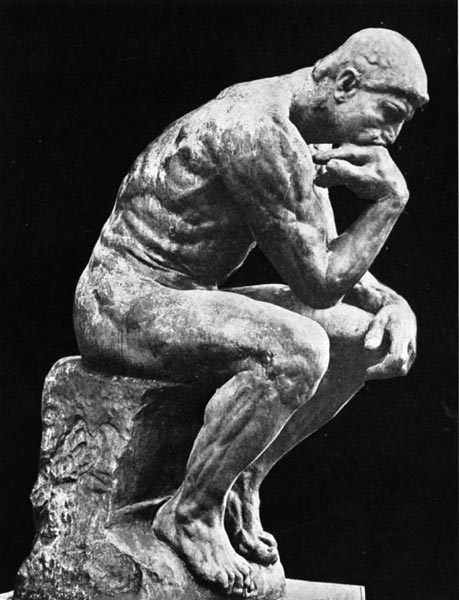
TELEOLOGY. Whether an action is right or wrong depends solely on the final results, regardless of how good the intentions may be. Such a person is called a teleologist.
DEONTOLOGY. Whether an action is right or wrong depends on the intention or motive behind the action, never mind the final results. Such a person is called a deontologist.
EXISTENTIALISM. Good and bad actions come from free choice of the individual. A good action must be voluntary, and must not be forced or compelled. It becomes bad if there is an element of force.
UTILITARIANISM. A good action is one that brings benefit to the majority or maximum number of people.
EGOISM. An action that has an element of self love, self preservation, or self interest.
Subscribe to:
Posts (Atom)