Monday, January 28, 2008

Sunday, January 27, 2008
Moral Development
Moral development concerns the development of moral values and behavior. Moral values are beliefs about what is right and wrong; moral behavior refers to actions consistent with these beliefs. Moral development is closely tied to other aspects of psychological growth. The ability to think and reason enables moral judgment, social and emotional development leads to moral values and empathy, and personality development includes the growth of conscience. Moral development is a lifelong process, especially as individuals encounter new and more complex ethical dilemmas in relations with peers, at the workplace, and in intimate relationships.
Young children acquire a sense of right and wrong partly through parental discipline but also in everyday conversations with their parents, who convey simple lessons about people’s feelings, the consequences of breaking rules, and what it takes to be a “good boy” or “good girl.” Another resource for early moral growth is the empathy that young children feel for the distress of others. For example, when parents or peers are upset, toddlers often look concerned and try to assist them. Psychologists continue to explore how interaction between parents and their young children contributes to the development of conscience and to the growth of caring for other people.
Moral development also influences the development of “prosocial” or altruistic behavior—actions such as sharing, cooperating, and helping performed for the benefit of others without expectation of a reward. Studies indicate that the motivation to act altruistically emerges very early. Young children are motivated to do the right thing primarily because they want to maintain warm relationships with caregivers and others who matter to them—not simply to avoid punishment, as was once believed.
For further readings, just visit this site
Wednesday, January 23, 2008
Heads up, class!

For next week's lectures and tutorials we will be looking at religion and ethics.Make sure that you do your readings before coming to class ;D.
Short Semester for Diploma
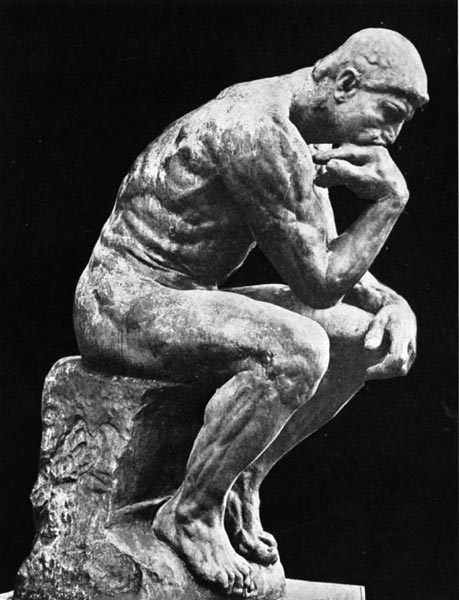
TELEOLOGY. Whether an action is right or wrong depends solely on the final results, regardless of how good the intentions may be. Such a person is called a teleologist.
DEONTOLOGY. Whether an action is right or wrong depends on the intention or motive behind the action, never mind the final results. Such a person is called a deontologist.
EXISTENTIALISM. Good and bad actions come from free choice of the individual. A good action must be voluntary, and must not be forced or compelled. It becomes bad if there is an element of force.
UTILITARIANISM. A good action is one that brings benefit to the majority or maximum number of people.
EGOISM. An action that has an element of self love, self preservation, or self interest.
Wednesday, November 14, 2007

Thursday, November 08, 2007
Revision questions-Short Answer
1.The Japanese occupation of much of Asia during the Second World War caused a lot of hardships amongst the civilian population. State TWO (2) ways in which the Japanese military exploited the civilian populations of their conquered countries
(4 marks)
2.Sylvia Pankhurst broke away from the Women's Social and Political Union (WSPU) in 1914. Name the organisation that she formed. (2 marks)
3.During the late 19th Century, European countries scrambled for colonies in Africa. Only TWO (2) countries in the African continent hold the distinction of remaining independent. Which two African countries hold this distinction? (4 marks)
4.The Cold War was a period of tension between the capitalist and communist ideologies.State in which conflicts did :
a)the US lose
b)the USSR lose (4 marks)
5.The city of Jerusalem is a Holy City. What is the name of the site that is holy to Christians? (2 marks)
Revision questions-Multiple choice
1.Women played vital roles during the First and Second World Wars. In which country were women allowed to enlist as soldiers fighting in the frontline?
A.Germany
B.Russia
C.England
D.Norway
2.The countries that make up the Triple Entente were:
A.Germany,Italy and Russia
B.France, Switzerland and Russia
C.Russia,England and France
D.Austria-Hungary, Germany and Italy
3.Vo Nguyen Giap and Ho Chi Minh were prominent Vietnamese nationalist figures. Name the site of the battle in which the Vietnamese forces manage to defeat the French forces and end their occupation of Indochina:
A.Ho Chi Minh City
B.Luang Prabang
C.Hue
D.Dien Bien Phu
4.Senkaku or Diayoutai Islands are a group of islands that are disputed by TWO(2) countries. Which countries claims these islands as their own?
A.Malaysia and Vietnam
B.Vietnam and China
C.China and Japan
D.Japan and South Korea
5.At the end of the Second World War, much of Europe was in ruins. The US decided that in order to stop Communism from spreading in Europe, she should give economic aid to much of Europe. This aid package was called;
A.The Truman Plan
B.The Brezhnev Plan
C.The Marshall Plan
D.The Josef Plan
Tuesday, November 06, 2007
Internal Marks

Due to unforeseen circumstances, I am unable to finish keying in your internal marks today.But don't despair-it will be in your homework folder soon.
Thursday, November 01, 2007
Tutorial-Child Soldiers

Before coming to your tutorials, it will help if you were to view the video on this Amnesty International site.
Child Soldiers-Children and armed conflict
Voices of Children at War
Monday, October 29, 2007
Spratlys

For additional information about the Spratly Islands, the southchinasea.org site should provide good reading material for your revision.
Friday, October 26, 2007

Tuesday, October 16, 2007
Notes, Notes, Notes
For notes on the Korean War, this site-Spartacus will be most helpful to all of you. The Cuban Missile Crisis? Then this site here will be useful.
The Vietnam War
The Vietnam War
Wednesday, October 10, 2007
The Middle East Notes

The Middle East is home to three of the world's greatest religions: Judaism,Chrisitianity and Islam.Sadly, the region is also wracked by what seems to be a neverending cycle of violence. Never a day goes by that we do not see images of violence and death in the Middle East on our TV screens.Why is there so much conflict, feelings of mistrust and anger amongst the Arabs and the Israelis? Finding a balanced view of the conflicts is not an easy task;most of the sites that are available on the Web are biased towards one party or the other. I have tried my best to sort out which sites are suitable for our topic, and they are listed below:
The Arab-Israeli Conflicts
Your land is my land
Suicide Terrorism-a historical background (Read this before coming to tutorial class)
Saturday, October 06, 2007
Tutorial Activity-The Vietnam War
Choose ONE photograph from this site on the Vietnam War which interests you and then complete a photo analysis sheet in class
Wednesday, September 26, 2007
Moral Studies Presentations, Sem.2

Very good effort and initiative shown by the groups so far, keep it up guys!
Wednesday, September 19, 2007
Attention!!

Starting from next week, all of you will be doing your group presentations in class ;D. Give it your best!
Friday, September 14, 2007
Individual Assignment #4: The Truman Doctrine
"At the present moment in world history nearly every nation must choose between alternative ways of life. The choice is too often not a free one. One way of life is based upon the will of the majority, and is distinguished by free institutions, representative government, free elections, guarantees of individual liberty, freedom of speech and religion, and freedom from political oppression. The second way of life is based upon the will of a minority forcibly imposed upon the majority. It relies upon terror and oppression, a controlled press and radio, fixed elections, and the suppression of personal freedoms. I believe that it must be the policy of the United States to support free peoples who are resisting attempted subjugation by armed minorities or by outside pressures. I believe that we must assist free peoples to work out their own destinies in their own way. I believe that our help should be primarily through economic stability and orderly political process."
-- President Harry S. Truman, March 12, 1947 in an Address Recommending aid to Greece and Turkey.
Questions
1. Who is Truman addressing? (2 marks)
2. What is Truman asking for? (2 marks)
3. What are the first and second "ways of life" that Truman refers to? (2 marks)
4. Who is President Truman referring to when speaking of the two different "ways of life"? (2 marks)
5. Give a modern day example of a country that lives by the first "way of life".
(2 marks)
The Cold War

The Cold War was the period of conflict, tension and competition between the United States and the Soviet Union and their respective allies from the mid-1940s to the early 1990s.
The Truman Doctrine

The Truman Doctrine was a proclamation by U.S. president Harry S. Truman on March 12, 1947. It stated that the U.S. would support Greece and Turkey with economic and military aid to prevent their falling into the Soviet sphere. The Doctrine shifted American foreign policy as regards the Soviet Union from Détente (French term, meaning a relaxing or easing) to, as George F. Kennan phrased it, a policy of containment of Soviet expansion. Historians often use it to mark the starting date of the Cold War.
More on the Truman Doctrine
Sunday, September 09, 2007
World War 2

At 4.45 am on 1 September 1939 the German battleship Schleswig-Holstein opened fire on the Polish garrison of the Westerplatte Fort, Danzig (modern-day Gdansk), in what was to become the first military engagement of World War Two. Simultaneously, 62 German divisions supported by 1,300 aircraft commenced the invasion of Poland.
Hitler's aggressive acquisition of territory began in 1936 when he ordered his army to reoccupy the Rhineland district of Germany. Bordering France, the Rhineland had been designated as a demilitarised zone by the Versailles Treaty ending World War I. It was a high-risk endeavor for Hitler. The German troops were unprepared, poorly equipped and had orders to retreat if the French offered any resistance. In the end, the maneuver went smoothly without any hindrance. Encouraged by this result, Hitler went on to absorb Austria and the German dominated Sudetenland area of Czechoslovakia into the German Third Reich in 1938. In March of the next year he occupied the remainder of Czechoslovakia...
World War Two
Subscribe to:
Posts (Atom)