Monday, August 20, 2007

Horrors of Modern Warfare-Trench Warfare


Although there had been some trench warfare in the American Civil War of 1861 - 65, and the Russian-Japanese War of 1904 - 05, it wasn't until the First World War that fixed trench warfare became the standard form of fighting. The trench system along the Western Front ran for approximately 475 miles, in an "S" shape across Europe, from the North Sea to Switzerland.
Trench warfare created a living environment for the men which was harsh, stagnant and extremely dangerous. Not only were trenches constantly under threat of attack from shells or other weapons, but there were also many health risks that developed into large-scale problems for medical personnel. Apart from the inescapable cold during the winters in France, trenches were often completely waterlogged and muddy, and crawling with lice and rats.

Rats, Lice and corpses
Trench Warfare manual
"So you think you can do better?"- Trench Warfare game Try playing this game if you have time, folks!

Group Project, Sem.2, 2007


20th Century World History FP-030
Pre-University Studies
Group Assignment
Total Marks: 30%

INTRODUCTION
________________________________________________________________________________

"History is a guide to navigation in perilous times. History is who we are and why we are the way we are."
- DAVID C. MCCULLOUGH

The 20th Century is a very turbulent and fascinating period in human history.Each decade of the 20th century had a distinct set of issues, events, and even style. This semester, students will have the opportunity to learn more about the 20th century by examining it decade by decade.

Objectives of this project are:
§ To encourage the practice of self-directed learning and collaborative learning among students;
§ To encourage students to do research on certain topics and to help them develop skills and self-confidence in research work, either alone or in a team; and
§ To help students acquire a comprehensive and broad-ranging prerequisite background knowledge of major world events.


PROJECT COMPONENT
________________________________________________________________________________
The research component of this project will entail an action plan, in-class presentation, and report writing. This will help give you a hands-on experience and a really good understanding of a particular issue.


Action plan
_______________________________________________________________________________
You are required to select ONE issue from the decade of your choice. For this semester, you will focus on the decades beginning from the 1940s until the 1990s. Your group will have to find as much information regarding the issue.

Music
Fashion
Significant Events
Personalities


You are also expected to confirm with your lecturer on the topic by Week 4 for approval.


Group presentation (10%)
_______________________________________________________________________________
Group presentation will be conducted in Week 9 and 10. All groups will conduct their presentations in their respective tutorial classes.Duration of presentation is 15-20 minutes.

Grading will be based on:

ü The issue chosen
ü Ability to entertain questions from others
ü Creativity
ü Contents


Report writing (20%)
_______________________________________________________________________________

(A) Report (20%):
1. A research paper on your chosen topic and how it relates to today's society
2. What are the specific roles each member is assigned to?
3. Your experience when undertaking the project (inclusive of the difficulties you encounter and strengths that you acquire as a group)

Guideline for the report
Topic of the report: You can choose your own title.
Submission date: Week 10
Reference: All sources must be properly acknowledged, i.e., using Harvard referencing style.
Length: 5- 6 pages.
Font: Tahoma, Ariel, Bookman and Times New Roman. The acceptable font size is 12. This will not include any charts, graphs, or other visual depictions.
Spacing: 1.5 spaced word on white A4 paper.
Additional Reminder: Your name, ID number, program, group number, word count, tutor’s name and the title of your assignment should be on the front cover of the assignment.

Schlieffen Plan- Germany's Plan for War


Ever since Germany had inflicted defeat upon France in the Franco-Prussian War of 1870-71, the major nations of Europe had busied themselves with plans for the next war, seen by many as inevitable given the conflicting ambitions of the major powers; which, in the case of France, included the repossession of Alsace and Lorraine, both lost to Germany as a consequence of the Franco-Prussian War.

"Keep The Right flank Strong", Schleiffen's Dying Words.

Sunday, August 19, 2007

Individual Assignment #2


Gavrilo Princip describes the assassination

Gavrilo Princip was placed on trial by the Austrian-Hungarian government in October 1914. What follows is an extract from the trial’s transcript in which Princip describes the assassination. Read the document and answer the questions which follow:

The Defendant: The car approached me and I heard the detonation of the bomb. I knew that a member of our group must have thrown it, but I did not know which one. The crowd began to move, and I moved with it for a bit. The cars had stopped. I thought that all was over, and I saw how Cabrinovic was being led away. The thought flashed through my mind to kill him so the matter would be closed. But as I saw the cars start on their way again, I abandoned the idea. At that moment I could not make out the archduke. I did see a lady seated next to him, but they went by very fast and her presence made no particular impression on me. I went towards the Lateiner Bridge and heard people say that the attempt had failed. Now I asked myself where I should take up my post. I had read the itinerary in the Bosanska Posta and in the Tagblatt.
I stopped . A certain Pusara came up to me and said, “have you seen this foolishness?” I made no response. He drew me aside. I thought that he might be a police spy, and felt that he wished to make me talk. One of his parents is a spy and I figured that he was one too. I don’t know if he was still close to me when the car passed by again. I drew my gun and fired twice at (Franz) Ferdinand, at a distance of four to five feet.

Presiding Judge: The second time, did you see the lady?
Defendant: No, what I saw was that there was someone else in the car still, and I wanted to kill Potiorek.
Presiding Judge: Did you know that your shots had gone home?
Defendant: No. I did not even know how many bullets I had fired. I raised my arm to commit suicide, but policemen and officers grabbed me and beat me, in order to pay me back for what I had done. They led me away all covered with blood to the police station, where I was kicked and beaten again.

Questions

1. Whom did Princip think to kill first? (2 marks)
2. In what papers had Princip read the archduke’s itinerary? (2 marks)
3. What did Princip think Pusara was? Why? (2 marks)
4. What had Princip attempted to do after shooting the archduke and his wife?
(2 marks)
5. How was Princip treated after his arrest?
(2 marks)

Assassination at Sarajevo


The assassination of Archduke Franz Ferdinand was the catalyst for the beginning of the First World War.You can read more about the shots that started a world war by clicking on this link, here

Friday, August 10, 2007

Individual Assignment #1: Winston Churchill and The Supremacy of the British Navy


Winston Churchill became First Lord of the Admiralty in October 1911 and strongly supported the naval construction program being pursued by the government. Following the Second Moroccan Crisis Churchill gave a speech in Glasgow on the state of British naval readiness which was directed at both the British public and the Germans. Read the speech and answer the questions which follow.

“ The purposes of British naval power are essentially defensive. We have no thoughts, and we have never had any thoughts, of aggression- and we attribute no such thoughts to other great powers. There is, however, this difference between the British naval power and the naval power of the great and friendly empire-and I trust it may long remain the great and friendly empire-of Germany. The British navy is to us a necessity and from some points of view, the German navy is to them more in nature of a luxury. Our naval power involves British existence. It is existence to us; it is expansion to them. We cannot menace the peace of a single Continental hamlet, nor do we wish to do so no matter how great and supreme our navy may become. But, on the other hand, the whole fortunes of our race and empire, the whole treasure accumulated during so many centuries of sacrifice and achievement would perish and be swept utterly away if our naval supremacy were to be impaired.
It is the British navy which makes Great Britain a great power. But Germany was a great power, respected and honoured all over the world, before she had a single ship. Those facts ought clearly be stated because there is no doubt that there is a disposition in some quarters to suppose that Great Britain and Germany are on terms of equality so far as naval risks are concerned. Such a supposition is utterly untrue. The government is resolved to maintain the naval supremacy which this country enjoys…We should be the first power to welcome any retardation or slackening of naval rivalry. We should meet any such slackening not by words or deeds…If there are to be increases upon the Continent of Europe we shall have no difficulty in meeting them to the satisfaction of the country. As naval competition becomes more acute, we shall have not only to increase the number of ships we build, but the ratio which our naval strength will have to bear to other great naval powers, so that our margin of superiority will become larger and not smaller as the strain grows greater. Thus we shall make it clear that other naval powers, instead of overtaking us by additional efforts, will only be more out distanced in consequence of the measures which we ourselves will take”.


Questions.


1. What does Churchill describe the purpose of the British Navy as being?
(2 marks)
2. What does he declare to be the difference between British naval power and the naval power of Germany?
(2 marks)
3. According to Churchill what would “perish and be swept utterly away if our naval supremacy were to be impaired”?
(2 marks)
4. How would Britain meet any slacking of naval rivalry?
(2 marks)
5. What does Churchill declare will happen “as naval competition becomes more acute”?
(2 marks)

Redemption Song


For your upcoming tutorial please view the video. Have fun ;D

Monday, August 06, 2007

Colonisation

Before coming for tutorial clases make sure you guys read up on the effects of colonisation and the "Scramble for Africa".

Thursday, August 02, 2007

Mentee list for Second Semester 2007

CHIN YI TING, ROSALIE 7D7B4895
CHAN YUE YONG 7D7B5153
RACHEL KEDUNG BULAN 7D7B5204
LING YU QING, JOE 7D7B4879
LEE YEN LEE 7D7B5167
WONG KAI SENG 7D7A4872
NG SONG WU 7D7A4857
NOORANIZAH MOHAMMAD SHAKIR 7D7B5160
SITI SARAH ABDURLAHIM 7D7B4983

Welcome!!


Second Semester 2007 students, welcome to the unit! Here's to a productive semester!

Wednesday, June 13, 2007

Revision # 3


Short Answer Questions:

1.On August 2, 1964, three North Vietnamese gunboats allegedly fired torpedoes at the U.S.S. Maddox, an American destroyer in international waters. This confrontation became known as ...(2 marks)


2.The Japanese had planned the invasion of Malaya for over a year. Why was Malaya an important objective to them? (4 marks)


3. Jerusalem is an important Holy City for three of the world's greatest religions-Christianity,Judaism and Islam. State the THREE (3) important religious sites which are important to the three religions. (6 marks)

Revision # 2


1.What do the two symbols on the two hands represent? Think carefully about who the USA was fighting in the war.
2.What do you think the phrase "Keep These Hands Off!" means? Explain in your own words.
3.What would the emotional reaction to the poster be for: men? women? children?

Sunday, June 10, 2007

Revision #1


Am sorry guys, a bit late in posting this! Well, let's see how well you guys can answer these questions:

1.By what conference was Vietnam divided into North and South?
A.Vienna
B.Geneva
C.Paris
D.Prague

2.The blockade of what European city in 1948 caused an emergency airlift of supplies?
A.Paris
B.Warsaw
C.Berlin
D.London

3.The planned placement of missiles in what pro-Soviet country caused a crisis during 1962?
A.Cuba
B.Puerto Rico
C.Haiti
D.Dominican Republic

4.Where did the Allies attack in Operation Fortitude?
A.Calais, France
B.Cherbourg, France
C.Normandy, France
D.Nowhere

5.On which date did Germany invade Poland?
A.3 September 1939
B.4 December 1938
C.29 August 1939
D.1 September 1939

6.Which nation attempted a conquest of Abyssinia but was badly defeated by the Abyssinians at the Battle of Adowa in 1896?
A.Britain
B.Germany
C.France
D.Italy

7.Simultaneous attacks on major cities, towns and military bases throughout Vietnam on January 30, 1968, during a major Vietnamese holiday, was known as this Offensive:
A.Tonkin
B.Binh
C.Tet
D.Mekong

8.Where was the Peace Treaty with Germany signed in 1919 ?
A.New York
B.Versailles
C.Vienna
D.Berlin

Wednesday, May 23, 2007

Moral Studies Reports

I'll keep this simple people: for your individual reports the maximum number of pages is 5-7 pages, for your group reports its 10-12 pages. That's all troops.

Monday, May 21, 2007

Individual Assignment Marks


Yeah,yeah I know, I've been a bit late in posting the marks. They're now posted in the homework folder and I've also printed out the results and posted them on the wall outside of my office.

Sunday, May 13, 2007

Moral and History Exhibition Semester 1, 2007


It was a successful day but very tiring, don't you agree students? More pics available here, thanks lordmatthese!

Thursday, April 26, 2007

One Land, Two Peoples


Click on the above image (I know,I know no image right? Trust me just click) for an interactive lesson on why the Arabs and the Jews have been fighting over a patch of land the size of the US state of Maryland

Wednesday, April 25, 2007

Monday, April 23, 2007

The 10,000 Day War


Vietnam War, also known as the Second Indochina War, military struggle fought in Vietnam from 1959 to 1975, involving the North Vietnamese and the National Liberation Front (NLF) in conflict with United States forces and the South Vietnamese army. From 1946 until 1954, the Vietnamese had struggled for their independence from France during the First Indochina War. At the end of this war, the country was temporarily divided into North and South Vietnam. North Vietnam came under the control of Vietnamese Communists who had opposed France and who aimed for a unified Vietnam under Communist rule. The South was controlled by non-Communist Vietnamese....More

TIME magazine coverage
PBS site

14 Days In October


The Cuban Missile Crisis of October 1962 was one of the turning points of the Cold War between the United States and the Soviet Union. At that time the two superpowers came close to war, possibly with nuclear weapons; after it, both countries began to seek ways to adjust to each other, in particular, to prevent the use of nuclear weapons.. MORE

On the Brink Of Nuclear War
How the World Came Close to Armageddon

Just for recreational reading, if any of you are interested:
20 Mishaps That Might Have Started A Nuclear War

Attention!! Exhibition Dates!


The exhibition for 20th Century World History and Moral Studies will take place on the 9th and 10th of May, 2007.

Tuesday, April 17, 2007

The Cold War


Cold War, term used to describe the post-World War II struggle between the United States and its allies and the Union of Soviet Socialist Republics (USSR) and its allies. During the Cold War period, which lasted from the mid-1940s until the end of the 1980s, international politics were heavily shaped by the intense rivalry between these two great blocs of power and the political ideologies they represented: democracy and capitalism in the case of the United States and its allies, and Communism in the case of the Soviet bloc. The principal allies of the United States during the Cold War included Britain, France, West Germany, Japan, and Canada. On the Soviet side were many of the countries of Eastern Europe—including Bulgaria, Czechoslovakia, Hungary, Poland, East Germany, and Romania—and, during parts of the Cold War, Cuba and China. Countries that had no formal commitment to either bloc were known as neutrals or, within the Third World, as nonaligned nations.

Marshall Plan

Truman Doctrine

Monday, April 16, 2007

Individual Assignment #4


The Pankhursts

Emmeline Pankhurst recalled that her determination to fight for women’s rights stemmed from a childhood memory: “My father bent over me, shielding the candle flame with his big hand and I heard him say, somewhat sadly, ‘What a pity she wasn’t born a lad.’” Eventually, Pankhurst and her daughters became suffragists; they marched and fought for the right of women to vote.
The struggle was often violent. “They came in bruised, hatless, faces scratched, eyes swollen, noses bleeding,” one of the Pankhurst daughters recalled. The women were often arrested for damaging property or disturbing the peace. Once in jail, the Pankhursts, like other suffragists, went on hunger strikes. This was a potentially dangerous action. The government allowed prison authorities to force feed hunger strikers by pouring liquids into their stomachs “through a rubber tube clamped to the nose or mouth.”
Neither jail nor abusive treatment could stop the Pankhursts, however. When Emmeline, a strong willed woman with a flair for public speaking, was arrested and jailed in 1908, she informed her judges, “If you had the power to send us to prison, not for six months, but for six years, or for our lives, the Government must not think they could stop this agitation. It would go on!” It did go on, and women in Britain eventually received the right to vote.
The Pankhursts reacted to their success by taking on new causes. Emmeline became active in moral issues until her death in 1928. Her eldest daughter, Christabel, became an ardent evangelical Christian. She moved to the United States and settled in California, where she died in 1959. Sylvia, Emmeline’s second daughter, worked for social reform in London’s working class slums and became one of the founders of Britain’s Communist Party. She moved to Ethiopia to fight against the Italian invasion of that African country. At the time of her death in 1956, she was the editor of the chief English language newspaper in Ethiopia. Throughout their careers, the Pankhursts remained firmly committed to their ideals.

Questions


1.Would you be willing to go through the things the Pankhursts suffered for something you belive in? Why or why not? (10 marks)
2.Can you identify an individual, or individuals, who is fighting today for social causes against strong opposition? Would you be willing to join the fight? Why or why not? (10 marks)

Friday, April 13, 2007

History Channel presents:Tora, Tora, Tora: The True Story of Pearl Harbor

The History Channel goes in-depth with this two-volume documentary Tora, Tora, Tora: The True Story of Pearl Harbor. December 7, 1941, was a tragic and surprising day for the United States. The attack on the Hawaiian island was a costly and sudden invitation to enter World War II. Archival footage and interviews make up the bulk of this release. Both American and Japanese remembrances are included for a complete history lesson. The series begins with the events leading up to the attack, especially concentrating on Admiral Yamamoto's detailed plans. Using personal testimony, the History Channel re-creates the frantic action on the ground as American soldiers scrambled for safety. Some, such as those aboard the U.S.S. Arizona, had no time to retaliate. The program concludes with a real-life reunion of soldiers from both sides. From inception to aftermath, Tora, Tora, Tora: The True Story of Pearl Harbor provides a thorough account of a day that will always live in the memory of a nation. ~ Sarah Ing, All Movie Guide.

Individual Assignment # 3


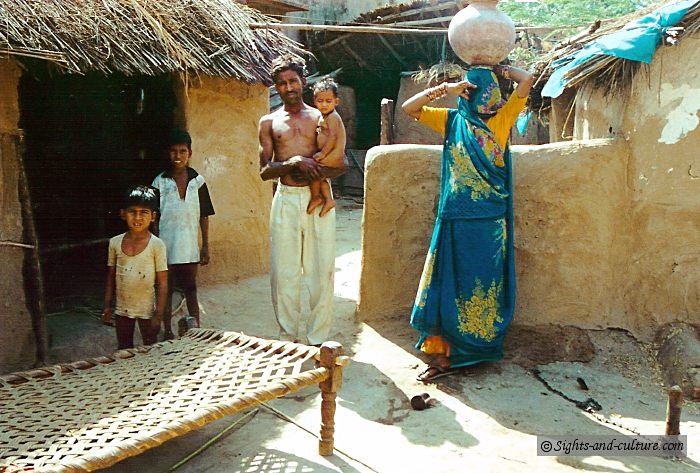
The Indian Village

In the cities in India, the rise of the middle class has changed many of the traditional ways of life. This is not necessarily true in the villages of India. The rural poor appear to live in conditions little changed from past generations. Nearly 80 percent of the Indian people still live in traditional rural villages.
Although some progress in education has been made in India, in the countryside education has been neglected. Thousands of villages remain without schools. The graduation rate from primary schools is only 37 percent, compared with more than 60 percent for all Asia.
In Indian villages, housing styles, customs and methods of farming have changed little since they were first described by Portuguese travelers in the sixteenth century. According to recent statistics, nearly 40 percent of people in rural areas live below the poverty level. The vast majority live in mud and thatch dwellings without running water or electricity, without education, often without hope. Their lives have been affected only slightly by the changes taking place in the cities or in the world beyond.
A visitor described one such village in the state of Uttar Pradesh in the upper Ganges valley:
I went inside every single cottage in the village. They are small mud huts with tiled roofs. The entrance is very low and many have no doors. Inside is a small walled in yard, lined on one side with a little verandah, and one or at the most two rooms. In each room lives a whole family. Inside the room there is usually an earthern silo for storing grain, but no other furniture. The chula (a brick or earthern stove used for cooking) is in the verandah; straw lies scattered in the yard; in some a little grain is drying on the floor. In the corner near the chula are piled neatly, face downward, the cooking utensils, earthern pots and a rare piece of brass.
That description was written in 1961, but could easily apply to thousands of Indian villages today

Questions
1.What do the majority of the rural population in India live without? (10 marks)

2.Compare your home to the home described here. How are they similar? How are they different? (10 marks)

Tuesday, April 10, 2007

Attention


The written report should be handed in during Week 12 and not Week 16, my apologies for that mistake boys and girls!

Sunday, April 08, 2007

The Longest Day


The first brief communique was electrifying -- ''London, Tuesday, June 6, 1944: Under command of General Eisenhower, Allied naval forces, supported by strong air forces, began landing Allied armies this morning on the northern coast of France.'' The world caught its breath. Not since 1688 had an invading army crossed the English Channel, but now it was happening -- Operation Overlord, D-Day, the all-out attack on Hitler's fortress Europe. The first assault wave hit the beaches of Normandy at 6:30 a.m.

The place of the landing was the best-kept, most important secret of the war in Europe, and success depended on elaborate deception; but it was the individual valor of the men who went ashore in combination with the greatest marshaling of ships, planes and guns ever in history that were decisive. Never was America's productive might so dramatically employed. The armada reached as far as the eye could see.

It should never be forgotten that, of all events of our tumultuous 20th century, perhaps the most important was the defeat of the Nazi empire; and for a long and very dark time, for nearly five years, that outcome was by no means certain. D-Day was the turning point. It was day one of the final drive to complete Allied victory.

The Longest Day
So you think you're tough?
Remembrance

Now, there are societies out there that specialise in re-enactments, check out these guys:
"We Stand Alone, Together"

A recommended film to watch for all of you film buffs out there will have to be this one:

Band of Brothers

Thursday, April 05, 2007

Mentee List

1 HU KUOK FONG 7D7A4786 1
2 PETRUS LUSAT JALONG 7D7A4470 1
3 YAN AZMAN 7D7A4471 1
4 SIAW FENG 7D7A4476 1
5 XIANG RON 7D7A4484 1
6 RALPH ALEXANDER LEE 7D7A4734 1
7 RACHEL FUENTES 7D7A4745 1
8 PHEBE, LIEW SZE MIIN 7D7A4359 1
9 LIEW KIM FUNG 7D7A4474 1
10 LU HIENG JUONG 7D7A4738 1
11 SHANG KIT NYUK DOROTHY 7D7A4659 1
12 LIM CHERN WUI 7D7A4562 1
13 WEN YEE 7D7A4531 7D7A4799 1
14 LOOK MUN SAN 7D7A4799 1
15 KONG BAN HUO, BRYANG 7D7A4805 1

Tuesday, April 03, 2007

Women's Roles During The Second World War


There is little doubt that women's work in the Second World War was an important factor in the course of the war. This involvement changed the social status and working lives of women in many countries from that point onwards.

Womens' contribution to the war was significant; though the attitudes towards their contribution were typically paternalistic.

WRENS
Women Under Fire In World War Two

Thursday, March 29, 2007

Individual Assignment #2


Heinrich Himmler-Leader of Terror


Born in 1900, Heinrich Himmler was the son of a middle class schoolteacher. While a student in agriculture at a technical institute in Munich, he joined the Nazi Party. For a while, he worked as a fertiliser salesperson. He then tried, unsuccessfully, to make a living raising chickens. All the while, he remained in the Nazi Party. In 1929, Adolf Hitler made him leader of the SS.
The SS had been formed in 1925 as Hitler’s elite bodyguard. To Hitler, Himmler was an ideal leader, because he was totally obedient to the Fuhrer. Like Hitler, Himmler believed that the racial struggle between Aryans and Jews was the key to world history. To Himmler, the SS should become the elite group of Nazism that would fulfill the dream of Aryan supremacy.
Himmler was a cold, calculating and efficient bureaucrat whose ruthlessness made him an ideal head of the SS. Beginning in 1929, Himmler began to recruit new members for the SS on the basis of his ideas of racial purity. Recruits were pure German types with blond hair, blue eyes and good physiques. To maintain his racial elite, Himmler insisted that SS men marry only racially pure Aryan women.
As the SS continued to grow, Himmler sought new sources of power through his control of the police. By 1936 he had become chief of the regular police. He then set up new divisions in the SS. The Gestapo was a secret police force that rounded up the regimes enemies. The Security Service was a network of spies. The Death’s Head Formations were responsible for running the concentration camps. The Waffen SS was a group of combat soldiers- the SS’s own army. The Einsaztgruppen were responsible in conquered countries for rounding up and shooting Jews and other “racial undesirables.” Himmler had become leader of a total system of terror.
During the war, Hitler made Himmler overseer of Nazi plans for reorganising Europe according to racial lines. Himmler acted ruthlessly. He said : “What happens to the Russians, what happens to the Czechs, is a matter of indifference to me….Whther or not 10,000 Russian women collapse from exhaustion while digging a tank ditch interests me only in so far as the tank ditch is completed for Germany.”
At the end of the war, with the Nazi Empire in collapse, Himmler sought to escape by taking on a false identity. He was captured by the British and ended his life by swallowing a poison vial he had hidden in his mouth.

Questions
1. Name and explain four of the SS Divisions developed by Himmler (10 Marks)
1. What is meant by “Aryan Supremacy”? (10 Marks)

Wednesday, March 28, 2007

BLITZKRIEG (LIGHTNING WAR)


In the first phase of World War II in Europe, Germany sought to avoid a long war. Germany's strategy was to defeat its opponents in a series of short campaigns. Germany quickly overran much of Europe and was victorious for more than two years by relying on a new military tactic called the "Blitzkrieg" (lightning war). Blitzkrieg tactics required the concentration of offensive weapons (such as tanks, planes, and artillery) along a narrow front. These forces would drive a breach in enemy defenses, permitting armored tank divisions to penetrate rapidly and roam freely behind enemy lines, causing shock and disorganization among the enemy defenses. German air power prevented the enemy from adequately resupplying or redeploying forces and thereby from sending reinforcements to seal breaches in the front. German forces could in turn encircle opposing troops and force surrender.

Germany successfully used the Blitzkrieg tactic against Poland (attacked in September 1939), Denmark (April 1940), Norway (April 1940), Belgium (May 1940), the Netherlands (May 1940), Luxembourg (May 1940), France (May 1940), Yugoslavia (April 1941), and Greece (April 1941). Germany did not defeat Great Britain, which was protected from German ground attack by the English Channel and the Royal Navy.

Tanks
A Contemporary TIME article on the Blitzkrieg

Tuesday, March 27, 2007

The Second World War


The modern world is still living with the consequences of the Second World War, the most titanic conflict in history. Just over 68 years ago on September 1st 1939, Germany invaded Poland without warning. By the evening of September 3rd, Britain and France were at war with Germany and within a week, Australia, New Zealand, Canada and South Africa had also joined the war. The world had been plunged into its second world war in 25 years. Six long and bloody years of total war, fought over many thousand of square kilometres followed. From the Hedgerows of Normandy to the streets of Stalingrad, the icy mountains of Norway to the sweltering deserts of Libya, the insect infested jungles of Burma to the coral reefed islands of the pacific. On land, sea and in the air, Poles fought Germans, Italians fought Americans and Japanese fought Australians in a conflict which was finally settled with the use of nuclear weapons. The Second World War involved every major world power in a war for global domination and at its end, more than 60 million people had lost their lives and most of Europe and large parts of Asia lay in ruins.

Principal Causes of World War 2
Total War

Moral Studies Group Project

Moral Studies MPW 2153
Foundation Studies Programme
Group Project Assignment
Total Marks: 25%

INTRODUCTION
________________________________________________________________________________
This semester, you are required to engage in a project, which aims at raising awareness in the community. The basic goal of this activity is to create an opportunity for you to research on a particular issue, and exhibits the poster in a way that will benefit others. This will help promote both intellectual and civic engagement by linking the work you do in the classroom to real-community needs.


PROJECT COMPONENT
________________________________________________________________________________
The component of this project will entail action plan, in-class presentation, an exhibition, and report writing. This will help give you a hands-on experience and a really good understanding of a particular issue.


Action plan
_______________________________________________________________________________
You are required to select ONE issue pertaining to Malaysian society. Your group will have to find as much information regarding the issue. You can refer to the last topic in the unit outline on moral issues, or you can choose any topic of a particular interest to your group (i.e., courtesy campaign, toilet cleanliness campaign, etc)

You are also expected to confirm with your lecturer on the topic by Week 4 (26 March, before 5 pm) for approval.


Group presentation (5%)
_______________________________________________________________________________
Group presentation will be conducted in Week 7 and 8. All groups will present in class the issue and the plan. Duration of presentation is 15-20 minutes.

Grading will be based on:

 The issue chosen.
 The poster.

Poster Exhibition (10%)
_______________________________________________________________________________

Poster exhibition on campus (Week 10)

Marks will be based on:
 The creativeness in presentation
 Relevance of issue
 Ability to entertain questions from others.
 Teamwork & effort

Group Report: Learning Journal (10%)
_______________________________________________________________________________

Learning Journal:

1. A ONE-page summary of the issue (i.e., the background, the importance)
2. What are your group’s suggestions to resolve this problem (Give 3 suggestions)
3. Your experience when undertaking the project (i.e., the difficulties you encounter and strengths that you acquire as a team).


Instructions for Learning Journal

Topic: You can choose your own title.
Submission date: Week 12
Reference: All sources must be properly acknowledged, i.e., using Harvard referencing style.
Length: 10-12 pages.
Font: Tahoma, Ariel, Bookman and Times New Roman. The acceptable font size is 12. This will not include any charts, graphs, or other visual depictions.
Spacing: 1.5 spaced word on white A4 paper.
Additional Reminder: Your name, ID number, program, group number, word count, tutor’s name and the title of your assignment should be on the front cover of the assignment.

Thursday, March 22, 2007

Group Project

20th Century World History FP-030
Pre-University Studies
Group Assignment
Total Marks: 25%

INTRODUCTION

________________________________________________________________________________
The 20th Century is a very turbulent and fascinating period in human history. This semester, you are required to engage in a project that has the aim of raising awareness amongst the community on certain topics that have or still has an impact on our world today.
For this semester, the focus of the group projects will be on the United Nations, specifically on the activities and causes that this great organisation is trying to promote so that our world would be a better place for us and future generations to live in.

Objectives of this project are:
§ To encourage the practice of self-directed learning and collaborative learning among students;
§ To encourage students to do research on certain topics and to help them develop skills and self-confidence in research work, either alone or in a team; and
§ To help students acquire a comprehensive and broad-ranging prerequisite background knowledge of major world events.


PROJECT COMPONENT
________________________________________________________________________________
The research component of this project will entail an action plan, in-class presentation, a poster exhibition, and report writing. This will help give you a hands-on experience and a really good understanding of a particular issue.


Action plan
_______________________________________________________________________________
You are required to select ONE (1) issue. Your group will have to find as much information regarding the issue. Examples of activities that the United Nations is currently undertaking and promoting are as follows:

Counter-Terrorism
Promoting Women’s Rights
Preventing Genocide
Banning the Recruitment of Child Soldiers
Demining

These are just a few of the activities and causes that the United Nations is currently striving to promote amongst its member states. You are encouraged to go and visit the United Nations website, www.un.org , and to select the cause or activity of your choice.

You are also expected to confirm with your lecturer your chosen topic by Week 4 (the 30th of March, before 5pm) for approval.


Group presentation (5%)
_______________________________________________________________________________
Group presentation will be conducted in Week 7 and 8. All groups will present in class the poster and the proposed strategy to be used in the campaign. Duration of presentation is 15-20 minutes.

Grading will be based on:

ü The issue chosen.
ü The poster.
ü Effectiveness of the strategy used to create awareness.
ü Effort in the campaign.

Report writing (10%)
_______________________________________________________________________________

(A) Report (10%):
1. A TWO-page summary of the issue (inclusive of the importance and its prevalence to the society)
2. What are the specific roles each member is assigned to?
3. Your experience when undertaking the project (inclusive of the difficulties you encounter and strengths that you acquire as a group)

Guideline for the report
Topic of the report: You can choose your own title.
Submission date: Week 12
Reference: All sources must be properly acknowledged, i.e., using Harvard referencing style.
Length: 5- 6 pages.
Font: Tahoma, Ariel, Bookman and Times New Roman. The acceptable font size is 12. This will not include any charts, graphs, or other visual depictions.
Spacing: 1.5 spaced word on white A4 paper.
Additional Reminder: Your name, ID number, program, group number, word count, tutor’s name and the title of your assignment should be on the front cover of the assignment.


Exhibition (10%)
_______________________________________________________________________________

The exhibition would be held in the campus in Week 10 .

Marks will be based on:ü Effectiveness
ü Creativity
ü Contents
ü Ability to entertain questions from others.
ü Teamwork

Wednesday, March 21, 2007

Apologies

My apologies to my tutorial group this evening-I did not give you all my 100% effort to make teaching history interesting and enjoyable to you all due to the fact that I was not focused enough. I promise that it will not happen again.

Another vid

Trying to find a film clip of the First World War era is a very difficult process. Luckily for us, we have dedicated individuals who spend their time collecting, editting and posting film clips on a free video sharing website like Youtube. In this video clip, which I had stumbled upon, you can clearly see how the masses in the countries that were involved in the First World War reacted to the declaration of war. The music's well...not to my taste but hey, the person who made the clip took a lot of effort to piece the clip together!

Sunday, March 18, 2007

The King of the Battlefield


The machine gun was used extensively by all sides during the First World War. Watch the video for an explanation of how this invention changed the face of war.

Tutorial Question:Total War

Look at the differences between how soldiers fight during the time of the flintlock:


And how soldiers fight during the First World War:


Compare and contrast their weaponry and tactics. Explain why was the First World War more deadly than previous wars.

Wednesday, March 14, 2007

Notes, I hear you say?


Want to know more about colonialism, imperialism, direct and indirect rule etc? This link here will be useful for all of you. Another important link that I came across while conducting research for this topic was Professor Joseph V.O'Brien's webpage, which had a link to a sample of a colonial treaty.Have fun reading!

Monday, March 12, 2007

Individual Assignment # 1


If Africans Were Left In Peace

Jomo Kenyatta was an eloquent spokesperson for independence for Kenya from British rule. His book “Facing Mount Kenya” was a detailed description of the ways of life of his native Kikuyu people. He ended the book with a plea for African independence

Jomo Kenyatta,
Facing Mount Kenya


If Africans were left in peace on their own lands Europeans would have to offer them the benefits of white civilisation in real earnest before they could obtain the African labour which they want so much. They would have to offer the African a way of life which was really superior to the one his fathers lived before him, and a share in the prosperity given them by their command of science. They would have to let the African choose what parts of European culture could be beneficially transplanted and how they could be adapted. He would probably not choose the gas bomb or the armed police force, but he might ask for some other things of which he does not get so much today. As it is, by driving him off his ancestral lands, Europeans have robbed him of the material foundations of his culture and reduced him to a state of serfdom incompatible with human happiness. The African is conditioned by the cultural and social institutions of centuries, to a freedom of which Europe has little conception, and it is not in his nature to accept serfdom forever. He realises that he must fight unceasingly for his own complete emancipation; for without this he is doomed to remain the prey of rival imperialisms, which in every successive year will drive their fangs deeply into his vitality and strength.

Questions


1. In your own words, describe the appeal that Jomo Kenyatta is making in regard to Africa (10 marks)
2. How would you, as a Westerner, respond to Kenyatta’s appeal? (10 marks)

Individual Assignments

Introduction

1. Individual Assignments will sonsist of FOUR (4) different questions which will cover different aspects of 20th Century World History.

The Assignment Component
Instruction


2. ONE (1) question will be given every TWO (2) weeks. Each student must complete eaxh question and compile the assignment questions and answers in a folder

Duration

3. The assignments are to be handed in to the lecturer by the end of WEEK 8.

Wednesday, March 07, 2007

The 'Scramble for Africa'


At the end of the 18th century colonialism seemed to have become a thing of the past. Britain had lost its Thirteen Colonies in America, Spain and Portugal had lost most of South America and Holland was having difficulties holding onto the East Indies.

A hundred years later, however, a second wave of colonisation took place. Within twenty years, from 1880 to 1900, every corner of the Earth, from the highest mountains in the Himalayas to the most remote Pacific island and Antarctica, came to be claimed by one or other European power. Africa saw the most dramatic colonisation. It was divided up as if it had been a cake split between greedy European leaders. This was called the "Scramble for Africa".
Africa, o Africa

Thursday, March 01, 2007

Welcome!!

Welcome 2007 1st sem students to 20th Century World History's very own blog!

Thursday, January 25, 2007

What?!


Well,well,well. I have completed marking all of your exam papers hehe! But you guys will have to wait before I can announce them to you all.

Tuesday, January 23, 2007

MCQ section completed

Well boys and gals of FP030, I've just completed marking your MCQ section of the paper hehe

Thursday, January 18, 2007

Bye Sem.2, 2006


Well, exams are now over, all I have to do now is mark all of your papers. To all of you out there-if I had done anything wrong, made you upset-I'm sorry. All of you are good students. It has been a pleasure teaching you guys.

Sunday, January 14, 2007

D-Day:Exam Week


Exams are finally here. Good luck guys!

Wednesday, January 10, 2007

Question, doubts?

Hey guys, if you find it difficult to study for our history exam, please, please, pleeeaasse see me?

Tuesday, January 09, 2007

Revision #3

1. During the late 19th century European states were involved in a race with one another to obtain colonies in Africa, in an event that is called "The Scramble For Africa". Why did these European powers deemed it necessary to have colonies?

2.Who was in the Triple Alliance and why was it formed?


3.Why did the US lose the war in Vietnam?

Monday, January 01, 2007

The Feeling-Love It When You Call


Hope all of you are studying hard hehehe!

Thursday, December 28, 2006

Revision #2

Short answer questions for y'all! See if you can answer 'em!

1.State THREE (3) reasons why the United States of America got involved in the Vietnam War
[6 marks]

2.The Cuban Missile Crisis was an important event in the history of the Cold War. President John F. Kennedy had several options available to him in order to resolve the crisis. Give examples of THREE (3) of these options
[5 marks]

3.The Charter of the United Nations gives the UN Security Council the power and responsibility to take collective action to maintain international peace and security. However, the UN has failed in a few cases to maintain the peace. Give THREE (3) examples where the UN has failed to keep the peace.
[6 marks]

4.The Second World War was the most devastating war in human history. What are the THREE (3) causes of the Second World War?
[6 marks]

Monday, December 18, 2006

Revision #1

Dreading the time when you have to sit for your final History exam? Fear not students, beginning from today I will post practice questions for all of you.However, just because a certain topic is covered in the quiz, IT DOES NOT MEAN THAT THE EXACT TOPIC WOULD COME OUT IN YOUR FINAL EXAM. In your final exam section A will consist of multiple choice questions like these:

1. What was the name of the theory that stated, if Korea fell to communism, other countries in the Far East would follow?

a) Domino Theory
b) Containment
c) Rolling back

2. Where Americans had high-tech weapons, the Vietcong...
a) had the support of the peasants
b) used guerrilla tactic
c) were fanatically determined to drive out the Americans

3. The belief that their country and race were superior to others led Europeans to conquer and colonise vast areas of territory all over the globe in the 19th century. Another way to say this would be...

a) Nationalism led to militarism.
b) Imperialism led to militarism.
c) Nationalism led to imperialism.

4. What did Castro do on coming to power that led to America banning Cuban sugar exports?

a) He banned sugar exports to America.
b) He nationalised American companies in Cuba.
c) He signed an agreement with the USSR.

5. Which of the following groups broke windows, heckled politicians, attacked policemen, set fire to churches and chained themselves to railings?
a) Suffragists
b) Suffragans
c) Suffragettes

6. What was the Truman Doctrine?
a) Containment of communism.
b) It was America's duty to allow free peoples to choose freedom.
c) Rolling back communism.

Let me know how you score people!

Thursday, December 14, 2006

Merry Xmas 2006


To all of my students out there who are celebrating Christmas-Merry Christmas, have fun but take care!

Tuesday, December 12, 2006

Dashboard Confessional-Stolen


I'll post history related stuff here again next week. In the meantime, enjoy the video clip!

Sunday, December 10, 2006

Argh


Oh no the end of another semester. It has been a roller coaster ride wasn't it guys? Here's hoping that you guys take the time to STUDY during the break!

Suffragettes and Women's Rights


The title of suffragette (also occasionally spelled suffraget) was given to members of the women's suffrage movement in the United Kingdom. The word was originally coined to describe a more radical faction of the suffrage movement in the UK, mainly members of the WSPU (Women's Social and Political Union), headed by Emmeline Pankhurst. Suffragist is a more general term for members of the movement, whether radical or conservative, male or female. American women preferred this more inclusive title, but people in the United States who were hostile to suffrage for the American woman used the UK word - pejoratively so, since the feminine-sounding version could be dismissed more easily. In the UK, the term Suffragist is usually used to describe members of the NUWSS.

Women's Rights-Improvements?
"What?! Women voting? You must be mad!!"
Suffragettes
Votes for Women

Thursday, December 07, 2006

Important Notice

Now hear this people-I want ALL of the groups to collect their Group Reports from me and RE-DO IT ALL OVER AGAIN. It seems that none of the groups had properly referenced their sources. Secondly, I want to meet up with members of Amanda Wong's and Yeo Jieh Sze's group next Thursday (14th December)at my office beginning at 9AM SHARP

Monday, December 04, 2006

The United Nations


The United Nations (UN) is an international organisation whose stated aims are to facilitate co-operation in international law, international security, economic development, and social equity. It was founded in 1945 at the signing of the United Nations Charter by 50 countries, replacing the League of Nations founded in 1919.

The UN was founded after the end of World War II by the victorious allied powers in the hope that it would act to prevent and intervene in conflicts between nations and make future wars impossible or limited. The organization's structure still reflects in some ways the circumstances of its founding, which has led to calls for reform. The five permanent members of the UN Security Council, each of which has veto power on any UN resolution, are the main victors of World War II or their successor states: People's Republic of China (which replaced the Republic of China), France, Russia (which replaced the Soviet Union), the United Kingdom, and the United States.

The UN website
Main Bodies of the UN

Friday, December 01, 2006

Notice

Guys,next week the venue of the lecture will be held at G3105, 8-9am.

Tuesday, November 28, 2006

Obstacles to development


One of the greatest obstacles to development in the developing world is poverty.What is poverty? Poverty is hunger. Poverty is lack of shelter. Poverty is being sick and not being able to see a doctor. Poverty is not having access to school and not knowing how to read. Poverty is not having a job, is fear for the future, living one day at a time. Poverty is losing a child to illness brought about by unclean water. Poverty is powerlessness, lack of representation and freedom.

Hunger
Child Trafficking
Corruption

Annual Dinner 2006


Haha yours truly just can't seem to dress right! Theme of the dinner "dress as you've always wanted to be" or something similar. Adam looked cool in his Rockabilly outfit!

Thursday, November 23, 2006

Have A Fun & Safe Weekend Everyone!


Flashpoint:Spratlys


The Asia-Pacific region is one of the most dynamic regions in the world in terms of economic growth. However, while there is an increasing economic interdependence between the countries in the Asia-Pacific region, the region also have its own share of problems.Across the region numerous territorial disputes lie dormant, awaiting only the manipulation by politicians to stoke nationalist passions or the discovery of natural resources to reawaken them. The fact that oil prices are rising and the majority of Asian states are significant energy importers has also placed pressure on Asian states to look for energy resources closer to home, and in some cases in disputed territories.

Territorial Dispute Over Dokdo
Tokdo or Takeshima
Spratly Islands Dispute
The Spratly Islands Dispute
Flashpoint Spratly

Japan-China Tensions Rise Over Tiny Islands

Monday, November 20, 2006

Condolence

Prayer of St. Francis of Assisi


Lord, make me an instrument of your peace.
Where this is hatred, let me sow love;
Where there is injury, pardon;
Where there is doubt, faith;
Where there is despair, hope;
Where there is darkness, light
And where there is sadness, joy.
O Divine Master,
grant that I may not so much seek to be consoled
as to console;
to be understood as to understand;
to be loved as to love.
For it is in giving that we receive;
It is in pardoning that we are pardoned,
and it is in dying that we are born to eternal life.

Exhibition pic


Well, I did ask a few of you if you had taken photos on the day of the exhibition, and because Aaron was the only one who actually turned up and gave me a copy of a photo taken on that day, so naturally his group gets to get their photo posted here. Aaw, lookit Aaron with his tie!

Sunday, November 19, 2006

Ever wondered...


What your ol' history lecturer looked like when he was 18 waay back in 1993? Well, have a look for yourselves:

Terrorism


What is "terrorism"? According to www.thefreedictionary.com/terrorism it is "The unlawful use or threatened use of force or violence by a person or an organized group against people or property with the intention of intimidating or coercing societies or governments, often for ideological or political reasons." However,it is interesting to note that according to the United Nations Office on Drugs and Crime UNODC, "The UN Member States still have no agreed-upon definition. Terminology consensus would, however, be necessary for a single comprehensive convention on terrorism, which some countries favour in place of the present 12 piecemeal conventions and protocols." I personally prefer the Oxford English Dictionary definition of terrorism, which states that terrorism is "a policy intended to strike with terror those against whom it is adopted; the employment of methods of intimidation; the fact of terrorising or condition of being terrorised."
Link1
Link2
Link3
Link4

Replacement classes

Ah, another wonderful week has started! Hope all of you are well rested and are all in good shape! The Degree program is still having their exams this week therefore we will not be able to use the lecture theatre.I have booked room G3105 for all of us this Wednesday (22/11/06). Lectures will start at 10.30 and end at 12.30 because I'm replacing two lectures hehehe.

Friday, November 17, 2006

Yeaaa!

Have a good and safe weekend guys! See y'all next week!

Thursday, November 16, 2006

Failed suicide bombing

From the documentary "Cult of the suicide bomber".

Sunday, November 12, 2006

Whoa, another notice!

Guys,there will be no lectures for this week and next week due to the Degree Program exams, however your tutorial classes will still be held, hahahaha! Do not forget to print and read the articles for this week's tutorial activity.

Oooooops!


Ahem, er guys, it seems that your ol' lecturer here is getting senile. The group marks for the exhibition is actually 10% and NOT 20% (refer to the course outline and the group project outline).Any questions, confused by your lecturer's early morning rants? Come see me in my office people! Group leaders, come and see me please!

Thursday, November 09, 2006

Tutorial Activity

For this tutorial activity on the Middle East, all of you will have to go to these sites. Print them out before coming to class and it would be very helpful if all of you had read through the documents as well:
Site1
Site2
Site3
Holy Sites
Population Statistics
Balfour Declaration
UN Partition Plan

Wednesday, November 08, 2006

The Middle East

The Middle East is home to three of the world's greatest religions: Judaism,Chrisitianity and Islam.Sadly, the region is also wracked by what seems to be a neverending cycle of violence. Why is there so much conflict, feelings of mistrust and anger amongst the Arabs and the Israelis? Finding a balanced view of the conflicts is not an easy task;most of the sites that are available on the Web are biased towards one party or the other. I have tried my best to sort out which sites are suitable for our topic, and they are listed below:

ME1
ME2

Six Day War


Yom Kippur War

Outstanding Work!!

Guys and gals of 20th Century World History: your ol' lecturer is so proud of all of you! All of you did very commendable work with the posters. The camarederie amongst all of you are superb.

Monday, November 06, 2006

Attention


Students, those of you who have class for CRTS tomorrow (8th November 2006) would have to attend the class, there will be no exemptions. Therefore your presentations in class would still go on as scheduled.However all is not lost-Mr Kantha's CRTS class starts at 8.30am, students who have presentations on that day must come early to varsity to set up their poster displays.

Sunday, November 05, 2006

Exhibition

Guys, as we all know, the 8th of November is the start date of the exhibtion for the group posters. The exhibition will run from the 8th until the 10th of November.Oh and as promised here are links on the Cold War in Africa and Afghanistan:

Angola1
Angola2

Afghanistan1
Afghanistan2

Friday, November 03, 2006

Individual Assignments-Results

The results/marks for your individual assignments is now available in the homework folder guys, check 'em out. Will these two persons come and see me as soon as possible please:

John Wong Sen Wen
Stacey Gregory

Thursday, November 02, 2006

Malaysian Studies Notice


According to instructions given to me by Mr. Awang, there will be no tutorial classes for Malaysian Studies next week (Week 13). For those of you who are in my tutorial classes- don't forget to bring those newspaper comic strips for tutorials on Week 14! That is all troops, have a good weekend.