Wednesday, June 13, 2007

Revision # 3


Short Answer Questions:

1.On August 2, 1964, three North Vietnamese gunboats allegedly fired torpedoes at the U.S.S. Maddox, an American destroyer in international waters. This confrontation became known as ...(2 marks)


2.The Japanese had planned the invasion of Malaya for over a year. Why was Malaya an important objective to them? (4 marks)


3. Jerusalem is an important Holy City for three of the world's greatest religions-Christianity,Judaism and Islam. State the THREE (3) important religious sites which are important to the three religions. (6 marks)

Revision # 2


1.What do the two symbols on the two hands represent? Think carefully about who the USA was fighting in the war.
2.What do you think the phrase "Keep These Hands Off!" means? Explain in your own words.
3.What would the emotional reaction to the poster be for: men? women? children?

Sunday, June 10, 2007

Revision #1


Am sorry guys, a bit late in posting this! Well, let's see how well you guys can answer these questions:

1.By what conference was Vietnam divided into North and South?
A.Vienna
B.Geneva
C.Paris
D.Prague

2.The blockade of what European city in 1948 caused an emergency airlift of supplies?
A.Paris
B.Warsaw
C.Berlin
D.London

3.The planned placement of missiles in what pro-Soviet country caused a crisis during 1962?
A.Cuba
B.Puerto Rico
C.Haiti
D.Dominican Republic

4.Where did the Allies attack in Operation Fortitude?
A.Calais, France
B.Cherbourg, France
C.Normandy, France
D.Nowhere

5.On which date did Germany invade Poland?
A.3 September 1939
B.4 December 1938
C.29 August 1939
D.1 September 1939

6.Which nation attempted a conquest of Abyssinia but was badly defeated by the Abyssinians at the Battle of Adowa in 1896?
A.Britain
B.Germany
C.France
D.Italy

7.Simultaneous attacks on major cities, towns and military bases throughout Vietnam on January 30, 1968, during a major Vietnamese holiday, was known as this Offensive:
A.Tonkin
B.Binh
C.Tet
D.Mekong

8.Where was the Peace Treaty with Germany signed in 1919 ?
A.New York
B.Versailles
C.Vienna
D.Berlin

Wednesday, May 23, 2007

Moral Studies Reports

I'll keep this simple people: for your individual reports the maximum number of pages is 5-7 pages, for your group reports its 10-12 pages. That's all troops.

Monday, May 21, 2007

Individual Assignment Marks


Yeah,yeah I know, I've been a bit late in posting the marks. They're now posted in the homework folder and I've also printed out the results and posted them on the wall outside of my office.

Sunday, May 13, 2007

Moral and History Exhibition Semester 1, 2007


It was a successful day but very tiring, don't you agree students? More pics available here, thanks lordmatthese!

Thursday, April 26, 2007

One Land, Two Peoples


Click on the above image (I know,I know no image right? Trust me just click) for an interactive lesson on why the Arabs and the Jews have been fighting over a patch of land the size of the US state of Maryland

Wednesday, April 25, 2007

Monday, April 23, 2007

The 10,000 Day War


Vietnam War, also known as the Second Indochina War, military struggle fought in Vietnam from 1959 to 1975, involving the North Vietnamese and the National Liberation Front (NLF) in conflict with United States forces and the South Vietnamese army. From 1946 until 1954, the Vietnamese had struggled for their independence from France during the First Indochina War. At the end of this war, the country was temporarily divided into North and South Vietnam. North Vietnam came under the control of Vietnamese Communists who had opposed France and who aimed for a unified Vietnam under Communist rule. The South was controlled by non-Communist Vietnamese....More

TIME magazine coverage
PBS site

14 Days In October


The Cuban Missile Crisis of October 1962 was one of the turning points of the Cold War between the United States and the Soviet Union. At that time the two superpowers came close to war, possibly with nuclear weapons; after it, both countries began to seek ways to adjust to each other, in particular, to prevent the use of nuclear weapons.. MORE

On the Brink Of Nuclear War
How the World Came Close to Armageddon

Just for recreational reading, if any of you are interested:
20 Mishaps That Might Have Started A Nuclear War

Attention!! Exhibition Dates!


The exhibition for 20th Century World History and Moral Studies will take place on the 9th and 10th of May, 2007.

Tuesday, April 17, 2007

The Cold War


Cold War, term used to describe the post-World War II struggle between the United States and its allies and the Union of Soviet Socialist Republics (USSR) and its allies. During the Cold War period, which lasted from the mid-1940s until the end of the 1980s, international politics were heavily shaped by the intense rivalry between these two great blocs of power and the political ideologies they represented: democracy and capitalism in the case of the United States and its allies, and Communism in the case of the Soviet bloc. The principal allies of the United States during the Cold War included Britain, France, West Germany, Japan, and Canada. On the Soviet side were many of the countries of Eastern Europe—including Bulgaria, Czechoslovakia, Hungary, Poland, East Germany, and Romania—and, during parts of the Cold War, Cuba and China. Countries that had no formal commitment to either bloc were known as neutrals or, within the Third World, as nonaligned nations.

Marshall Plan

Truman Doctrine

Monday, April 16, 2007

Individual Assignment #4


The Pankhursts

Emmeline Pankhurst recalled that her determination to fight for women’s rights stemmed from a childhood memory: “My father bent over me, shielding the candle flame with his big hand and I heard him say, somewhat sadly, ‘What a pity she wasn’t born a lad.’” Eventually, Pankhurst and her daughters became suffragists; they marched and fought for the right of women to vote.
The struggle was often violent. “They came in bruised, hatless, faces scratched, eyes swollen, noses bleeding,” one of the Pankhurst daughters recalled. The women were often arrested for damaging property or disturbing the peace. Once in jail, the Pankhursts, like other suffragists, went on hunger strikes. This was a potentially dangerous action. The government allowed prison authorities to force feed hunger strikers by pouring liquids into their stomachs “through a rubber tube clamped to the nose or mouth.”
Neither jail nor abusive treatment could stop the Pankhursts, however. When Emmeline, a strong willed woman with a flair for public speaking, was arrested and jailed in 1908, she informed her judges, “If you had the power to send us to prison, not for six months, but for six years, or for our lives, the Government must not think they could stop this agitation. It would go on!” It did go on, and women in Britain eventually received the right to vote.
The Pankhursts reacted to their success by taking on new causes. Emmeline became active in moral issues until her death in 1928. Her eldest daughter, Christabel, became an ardent evangelical Christian. She moved to the United States and settled in California, where she died in 1959. Sylvia, Emmeline’s second daughter, worked for social reform in London’s working class slums and became one of the founders of Britain’s Communist Party. She moved to Ethiopia to fight against the Italian invasion of that African country. At the time of her death in 1956, she was the editor of the chief English language newspaper in Ethiopia. Throughout their careers, the Pankhursts remained firmly committed to their ideals.

Questions


1.Would you be willing to go through the things the Pankhursts suffered for something you belive in? Why or why not? (10 marks)
2.Can you identify an individual, or individuals, who is fighting today for social causes against strong opposition? Would you be willing to join the fight? Why or why not? (10 marks)

Friday, April 13, 2007

History Channel presents:Tora, Tora, Tora: The True Story of Pearl Harbor

The History Channel goes in-depth with this two-volume documentary Tora, Tora, Tora: The True Story of Pearl Harbor. December 7, 1941, was a tragic and surprising day for the United States. The attack on the Hawaiian island was a costly and sudden invitation to enter World War II. Archival footage and interviews make up the bulk of this release. Both American and Japanese remembrances are included for a complete history lesson. The series begins with the events leading up to the attack, especially concentrating on Admiral Yamamoto's detailed plans. Using personal testimony, the History Channel re-creates the frantic action on the ground as American soldiers scrambled for safety. Some, such as those aboard the U.S.S. Arizona, had no time to retaliate. The program concludes with a real-life reunion of soldiers from both sides. From inception to aftermath, Tora, Tora, Tora: The True Story of Pearl Harbor provides a thorough account of a day that will always live in the memory of a nation. ~ Sarah Ing, All Movie Guide.

Individual Assignment # 3


The Indian Village

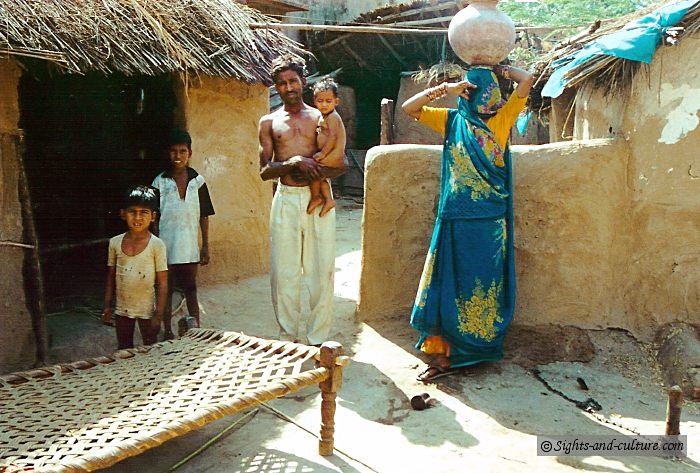
In the cities in India, the rise of the middle class has changed many of the traditional ways of life. This is not necessarily true in the villages of India. The rural poor appear to live in conditions little changed from past generations. Nearly 80 percent of the Indian people still live in traditional rural villages.
Although some progress in education has been made in India, in the countryside education has been neglected. Thousands of villages remain without schools. The graduation rate from primary schools is only 37 percent, compared with more than 60 percent for all Asia.
In Indian villages, housing styles, customs and methods of farming have changed little since they were first described by Portuguese travelers in the sixteenth century. According to recent statistics, nearly 40 percent of people in rural areas live below the poverty level. The vast majority live in mud and thatch dwellings without running water or electricity, without education, often without hope. Their lives have been affected only slightly by the changes taking place in the cities or in the world beyond.
A visitor described one such village in the state of Uttar Pradesh in the upper Ganges valley:
I went inside every single cottage in the village. They are small mud huts with tiled roofs. The entrance is very low and many have no doors. Inside is a small walled in yard, lined on one side with a little verandah, and one or at the most two rooms. In each room lives a whole family. Inside the room there is usually an earthern silo for storing grain, but no other furniture. The chula (a brick or earthern stove used for cooking) is in the verandah; straw lies scattered in the yard; in some a little grain is drying on the floor. In the corner near the chula are piled neatly, face downward, the cooking utensils, earthern pots and a rare piece of brass.
That description was written in 1961, but could easily apply to thousands of Indian villages today

Questions
1.What do the majority of the rural population in India live without? (10 marks)

2.Compare your home to the home described here. How are they similar? How are they different? (10 marks)

Tuesday, April 10, 2007

Attention


The written report should be handed in during Week 12 and not Week 16, my apologies for that mistake boys and girls!

Sunday, April 08, 2007

The Longest Day


The first brief communique was electrifying -- ''London, Tuesday, June 6, 1944: Under command of General Eisenhower, Allied naval forces, supported by strong air forces, began landing Allied armies this morning on the northern coast of France.'' The world caught its breath. Not since 1688 had an invading army crossed the English Channel, but now it was happening -- Operation Overlord, D-Day, the all-out attack on Hitler's fortress Europe. The first assault wave hit the beaches of Normandy at 6:30 a.m.

The place of the landing was the best-kept, most important secret of the war in Europe, and success depended on elaborate deception; but it was the individual valor of the men who went ashore in combination with the greatest marshaling of ships, planes and guns ever in history that were decisive. Never was America's productive might so dramatically employed. The armada reached as far as the eye could see.

It should never be forgotten that, of all events of our tumultuous 20th century, perhaps the most important was the defeat of the Nazi empire; and for a long and very dark time, for nearly five years, that outcome was by no means certain. D-Day was the turning point. It was day one of the final drive to complete Allied victory.

The Longest Day
So you think you're tough?
Remembrance

Now, there are societies out there that specialise in re-enactments, check out these guys:
"We Stand Alone, Together"

A recommended film to watch for all of you film buffs out there will have to be this one:

Band of Brothers

Thursday, April 05, 2007

Mentee List

1 HU KUOK FONG 7D7A4786 1
2 PETRUS LUSAT JALONG 7D7A4470 1
3 YAN AZMAN 7D7A4471 1
4 SIAW FENG 7D7A4476 1
5 XIANG RON 7D7A4484 1
6 RALPH ALEXANDER LEE 7D7A4734 1
7 RACHEL FUENTES 7D7A4745 1
8 PHEBE, LIEW SZE MIIN 7D7A4359 1
9 LIEW KIM FUNG 7D7A4474 1
10 LU HIENG JUONG 7D7A4738 1
11 SHANG KIT NYUK DOROTHY 7D7A4659 1
12 LIM CHERN WUI 7D7A4562 1
13 WEN YEE 7D7A4531 7D7A4799 1
14 LOOK MUN SAN 7D7A4799 1
15 KONG BAN HUO, BRYANG 7D7A4805 1

Tuesday, April 03, 2007

Women's Roles During The Second World War


There is little doubt that women's work in the Second World War was an important factor in the course of the war. This involvement changed the social status and working lives of women in many countries from that point onwards.

Womens' contribution to the war was significant; though the attitudes towards their contribution were typically paternalistic.

WRENS
Women Under Fire In World War Two

Thursday, March 29, 2007

Individual Assignment #2


Heinrich Himmler-Leader of Terror


Born in 1900, Heinrich Himmler was the son of a middle class schoolteacher. While a student in agriculture at a technical institute in Munich, he joined the Nazi Party. For a while, he worked as a fertiliser salesperson. He then tried, unsuccessfully, to make a living raising chickens. All the while, he remained in the Nazi Party. In 1929, Adolf Hitler made him leader of the SS.
The SS had been formed in 1925 as Hitler’s elite bodyguard. To Hitler, Himmler was an ideal leader, because he was totally obedient to the Fuhrer. Like Hitler, Himmler believed that the racial struggle between Aryans and Jews was the key to world history. To Himmler, the SS should become the elite group of Nazism that would fulfill the dream of Aryan supremacy.
Himmler was a cold, calculating and efficient bureaucrat whose ruthlessness made him an ideal head of the SS. Beginning in 1929, Himmler began to recruit new members for the SS on the basis of his ideas of racial purity. Recruits were pure German types with blond hair, blue eyes and good physiques. To maintain his racial elite, Himmler insisted that SS men marry only racially pure Aryan women.
As the SS continued to grow, Himmler sought new sources of power through his control of the police. By 1936 he had become chief of the regular police. He then set up new divisions in the SS. The Gestapo was a secret police force that rounded up the regimes enemies. The Security Service was a network of spies. The Death’s Head Formations were responsible for running the concentration camps. The Waffen SS was a group of combat soldiers- the SS’s own army. The Einsaztgruppen were responsible in conquered countries for rounding up and shooting Jews and other “racial undesirables.” Himmler had become leader of a total system of terror.
During the war, Hitler made Himmler overseer of Nazi plans for reorganising Europe according to racial lines. Himmler acted ruthlessly. He said : “What happens to the Russians, what happens to the Czechs, is a matter of indifference to me….Whther or not 10,000 Russian women collapse from exhaustion while digging a tank ditch interests me only in so far as the tank ditch is completed for Germany.”
At the end of the war, with the Nazi Empire in collapse, Himmler sought to escape by taking on a false identity. He was captured by the British and ended his life by swallowing a poison vial he had hidden in his mouth.

Questions
1. Name and explain four of the SS Divisions developed by Himmler (10 Marks)
1. What is meant by “Aryan Supremacy”? (10 Marks)